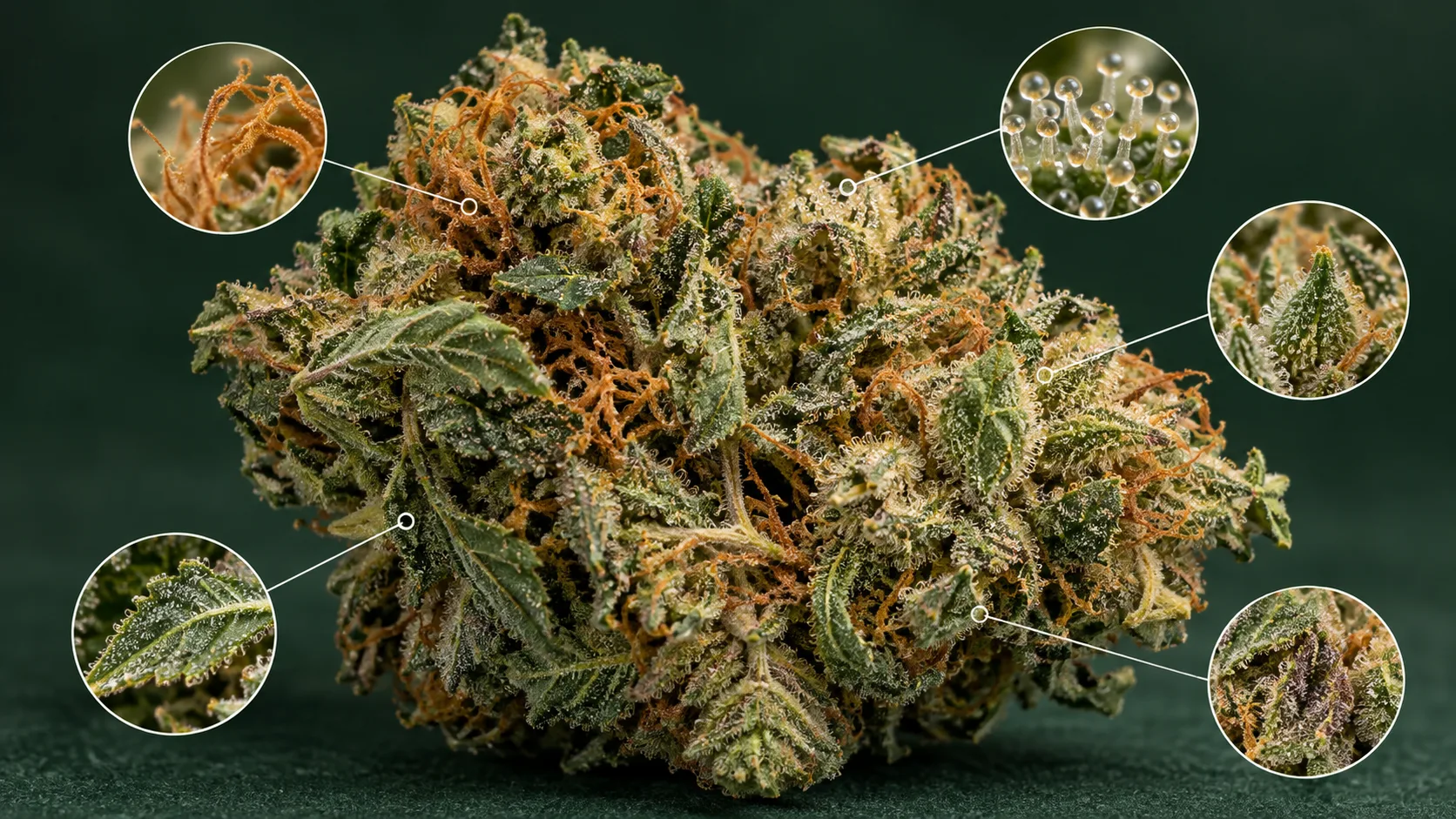
Start with the whole flower, then zoom in. Extreme macro photos may reveal resin glands but hide the overall bud shape. Distant photos show shape but lose texture. A useful identification image keeps one dry bud in focus with both structure and surface detail visible.
1. Overall bud structure
Look at the silhouette first. Is the flower elongated, spear-shaped, rounded, chunky, airy, compact, or foxtailed? Shape can reflect genetics, but it also reflects cultivation, light exposure, harvest timing, trimming, compression, and drying. Use structure as a broad comparison clue, not a strain label.
2. Density and spacing
Dense flower has tightly packed bracts with limited open space. Airier flower may expose more stem and separated clusters. Neither style is automatically better. Some cultivars naturally form looser flowers, while environment and post-harvest handling can make density look different from one batch to another.
3. Trichome coverage
Trichomes are glandular structures associated with resin production. In a clear photograph they may look like frost across bracts and sugar leaves. Visible coverage helps a bud identifier compare surface texture, but a camera cannot convert sparkle into an exact THC or terpene percentage. Read our cannabis trichome guide for the full context.
4. Pistils and stigmas
The hair-like threads commonly called pistils are more precisely stigmas, parts of the female flower that receive pollen. They may appear pale, cream, orange, red-brown, or dark depending on development, aging, handling, and photography. Their color can help describe the sample but cannot establish potency or a cultivar by itself.
5. Color pattern
Notice the balance of light green, deep green, olive, purple, amber, orange, cream, and brown. Genetics can influence pigments, but temperature, nutrition, maturity, curing, oxidation, lighting, and camera white balance also matter. Purple flower is not automatically stronger, and brown flower is not automatically unsafe—though dullness or discoloration deserves closer inspection.
6. Leaf and trim pattern
Sugar leaves can remain tucked between bracts or protrude beyond the flower. A close hand trim may expose the compact structure; a rough or leafy trim can hide it. Machine trimming, compression, and transport can also alter the surface. Trim reflects handling as much as identity.
7. Condition and possible warning signs
Check for crushing, excess stem, loose shake, brittle edges, flattened trichomes, seeds, foreign material, unusual powder, web-like growth, or fuzzy patches. Photos can flag something worth examining, but an app result is not a safety clearance. If flower looks or smells suspicious, do not rely on identification software to approve it. Compare our guide to moldy weed versus trichomes.
Bud identifier checklist
| Look for | Ask yourself |
|---|---|
| Shape | Can I see the complete silhouette, not only a macro crop? |
| Surface detail | Are trichomes, stigmas, bracts, and leaf edges actually in focus? |
| Color | Is the light neutral, or is flash, LED color, or a filter changing the image? |
| Scale | Is the flower large enough in frame to inspect without hiding its overall form? |
| Condition | Do I see dryness, compression, possible contamination, or handling damage? |
| Context | Do packaging, batch information, aroma, and COA support the visual story? |
How to photograph a bud for identification
- Use one intact dry bud against a plain background.
- Choose bright indirect light with neutral color.
- Move close enough to show texture without losing focus.
- Avoid fingers, bags, jars, grinders, mixed flower, and filters.
- Take several candidate photos if needed, then submit the single clearest frame.
Our weed photography checklist explains the setup, while the main weed strain identifier guide shows how photo comparison fits with labels and lab reports.
Scan the whole bud with KushScan
KushScan compares visible dry-flower features such as structure, texture, color, pistils, and trichome patterns. Use one clear frame and treat the likely matches as visual context.
Download KushScanThe takeaway
A useful bud identifier does not depend on one magical clue. Read the whole structure, then add density, trichomes, stigmas, color, trim, and condition. Together they support a better comparison; they still do not replace provenance, genetics, or laboratory testing.
Sources
- Frontiers in Plant Science: Architecture and Florogenesis in Female Cannabis sativa Plants, flower and inflorescence morphology.
- Botanical Studies: Glandular Trichome Development, Morphology, and Maturation in Cannabis Inflorescences, research on glandular trichomes.
- Oregon State University Extension: Hemp Anatomy, illustrated cannabis anatomy reference.
- Cannabis Chemovar Nomenclature Misrepresents Chemical and Genetic Diversity, context on why appearance and names do not certify chemistry.