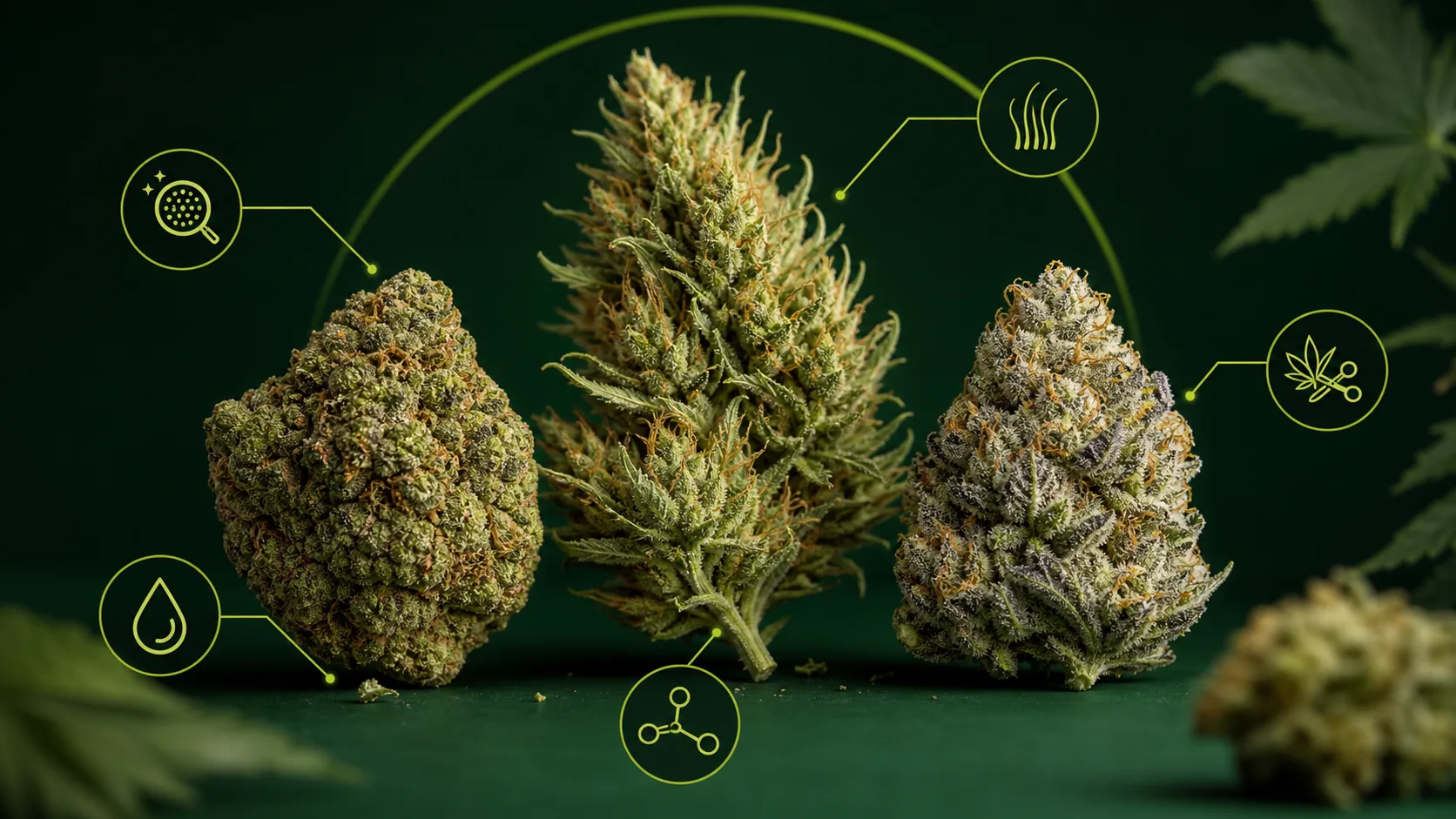
People often judge cannabis by first impression: does the bud look chunky, frosty, colorful, and fresh? That instinct is not useless. Flower appearance can reveal real clues about plant architecture, resin production, harvest timing, trim quality, cure, age, and rough handling.
The mistake is treating bag appeal like a lab report. A beautiful nug can still be old, mislabeled, contaminated, or less potent than expected. A looser sun-grown bud can be aromatic, well-cured, and excellent. The goal is not to worship dense flower; it is to read structure in context.
Bud structure cannabis quality clues: the quick read
- Dense, compact buds often suggest genetics selected for tight flower formation and/or controlled indoor or greenhouse conditions, but density alone does not equal better effects.
- Airy or open buds may come from genetics, sunlight-grown conditions, heat stress, light exposure, or later-stage handling. They are not automatically bad.
- Foxtailing can be genetic in some cultivars or stress-related in others. Context matters.
- Visible trichomes can suggest resin-rich flower, but your eyes cannot calculate THC percentage.
- Trim, cure, smell, texture, labels, and COAs matter as much as shape — and sometimes more.
Dense buds: impressive, but not automatically superior
Dense cannabis flower tends to look premium because it feels heavy, photographs well, and often survives packaging with less visible collapse. Many modern commercial cultivars have been selected for thick clusters, tight bracts, heavy resin, and strong retail appeal.
Density can be a good sign when it comes with the rest of the package: fresh aroma, good cure, visible resin, minimal excess leaf, no mold, realistic label data, and a trustworthy source. But density can also hide problems. Very tight buds may trap moisture if dried poorly, and a compressed nug can make it harder to inspect the interior for gray fuzz, musty odor, or foreign material.
Use density as one clue, not the verdict. Break a bud open gently and pay attention to smell, texture, and whether the inside looks clean and properly cured.
Airy buds: sometimes weak, sometimes just different
Airy flower gets judged harshly, especially next to glossy indoor eighths. Sometimes that judgment is fair: loose structure can point to insufficient light, heat stress, poor plant health, early harvest, or rushed post-harvest work. But airy does not always mean low quality.
Some cultivars naturally form longer, looser, spear-like flowers. Outdoor and greenhouse cannabis may express more open architecture than dense indoor flower, especially when grown for aroma, resilience, or full-season sun rather than maximum shelf density. A looser bud with lively terpenes, good cure, and clean testing can be a better experience than a rock-hard nug that smells flat.
The practical question is: does the structure look intentional and healthy, or neglected and underdeveloped?
Foxtailing: genetics, stress, or both
Foxtailing describes stacks of calyx-like flower growth that create little towers, points, or tails. Some famous strains and phenotypes naturally show this look. In other cases, foxtailing can happen when plants experience stress near flowering, such as excessive light intensity or heat.
Visual context helps. Neat, resinous foxtails across an otherwise healthy bud may simply be part of the cultivar’s expression. Sparse new growth, bleached tips, weak aroma, or uneven maturity may suggest stress. Either way, foxtailing does not automatically prove good or bad cannabis. It is a pattern to interpret alongside aroma, trichome condition, cure, and source.
Trichomes are the frost — not the full chemistry report
Trichomes are tiny glandular structures on cannabis flower, especially abundant on female inflorescences. Scientific reviews describe them as important sites for cannabinoid and terpene production, which is why frosty flower attracts attention.
Visible frost can be meaningful. It often signals resin production and careful handling. But photos and naked-eye inspection have limits. You cannot reliably estimate exact THC, CBD, terpene percentages, residual pesticides, heavy metals, microbes, mycotoxins, water activity, or solvents from trichome sparkle.
Also watch for damaged trichomes. Rough machine trimming, over-dry storage, old packaging, or crushed bags can knock resin heads loose. A bud may still be usable, but heavy shake and dull surfaces can suggest poorer handling.
Trim quality: what leaves and stems reveal
Trim affects both appearance and experience. A clean trim removes much of the excess sugar leaf and stem while preserving the flower’s shape and resin. Over-trimming can shave off trichomes and make buds look artificially smooth. Under-trimming can leave leafy material that adds harshness and hides the actual flower structure.
Do not demand identical trim from every grow style. Hand-trimmed craft flower may look more natural. Budget flower may be looser or leafier. The red flags are different: lots of broken pieces, excessive stem weight, visible seeds, foreign material, powdery surfaces, or anything that looks moldy or contaminated.
Freshness and cure change how structure feels
Good cannabis should usually feel slightly springy, not wet and spongy, and not so dry that it turns to dust. Drying and curing influence aroma, texture, burn quality, and shelf life. Too much available moisture can increase microbial risk; too little can leave flower brittle and muted.
Regulated markets take this seriously. California’s Department of Cannabis Control lists moisture content and water activity among required cannabis testing categories, along with cannabinoids, terpenes, pesticides, heavy metals, microbial impurities, mycotoxins, residual solvents, and foreign material. That is a reminder that “looks fresh” is not the same as verified safety.
What bud structure can suggest about strain identification
Bud structure is one reason photo-based cannabis tools can be useful. A clear dry-flower picture can show density, calyx shape, color distribution, pistils, trim pattern, and trichome coverage. Those visible features help compare an unknown sample against known strain examples.
But strain names are messy. Different growers can sell different flower under the same name, and two phenotypes from the same genetics can look and smell different. For deeper context, read our guide to how to identify a weed strain by picture and our beginner guide to cannabis genetics, phenotypes, and lineage.
A practical flower quality checklist
- Structure: Does the bud look mature, intact, and consistent with its grow style?
- Aroma: Is it clear and strain-appropriate, or musty, grassy, chemical, or flat?
- Texture: Is it springy and cured, not damp, spongy, brittle, or powdery?
- Surface: Are trichomes visible and intact, without fuzzy gray mold or suspicious residue?
- Trim: Is there reasonable flower-to-leaf balance and minimal stem weight?
- Documentation: If bought legally, can you see batch data, dates, cannabinoid numbers, terpene information, and a Certificate of Analysis?
Where KushScan fits
KushScan is useful for studying dry cannabis flower visually. It can help compare bud structure, color, trichome cues, and strain-pattern similarity from a clear photo. That makes it a helpful learning layer when you want to understand why one flower looks dense and resinous while another looks airy, leafy, or sun-grown.
Use it honestly: KushScan does not replace lab testing, detect invisible contaminants, or certify exact genetics from a single image. Pair the scan with labels, COAs, trustworthy sourcing, and your own common sense.
Scan cannabis flower structure with KushScan
Take a sharp dry-bud photo and use KushScan to compare visible structure, color, trichome cues, and likely strain-style patterns — without pretending a photo replaces lab testing.
Download KushScanThe takeaway
Bud structure can tell you a lot about cannabis quality, but only when you treat it as evidence, not proof. Dense buds can be excellent or overhyped. Airy buds can be weak or beautifully grown. Foxtailing can be genetic or stress-related. Frost can signal resin, but chemistry still requires testing. The best read combines appearance, aroma, texture, trim, freshness, source, and lab documentation when available.
Sources
- Empirical Evaluation of Inflorescences’ Morphological Attributes for Yield Optimization of Medicinal Cannabis Cultivars, peer-reviewed research on cannabis inflorescence morphology and image analysis.
- Morphological Characterization of Cannabis sativa L. Throughout Its Complete Life Cycle, peer-reviewed study covering cannabis flower development and trichome features.
- California Department of Cannabis Control: Testing laboratories, regulator overview of required cannabis testing categories and Certificates of Analysis.
- NIH NCCIH: Cannabis, Marijuana, and Cannabinoids — What You Need To Know, federal health-information overview of cannabis, THC, CBD, and cannabinoids.