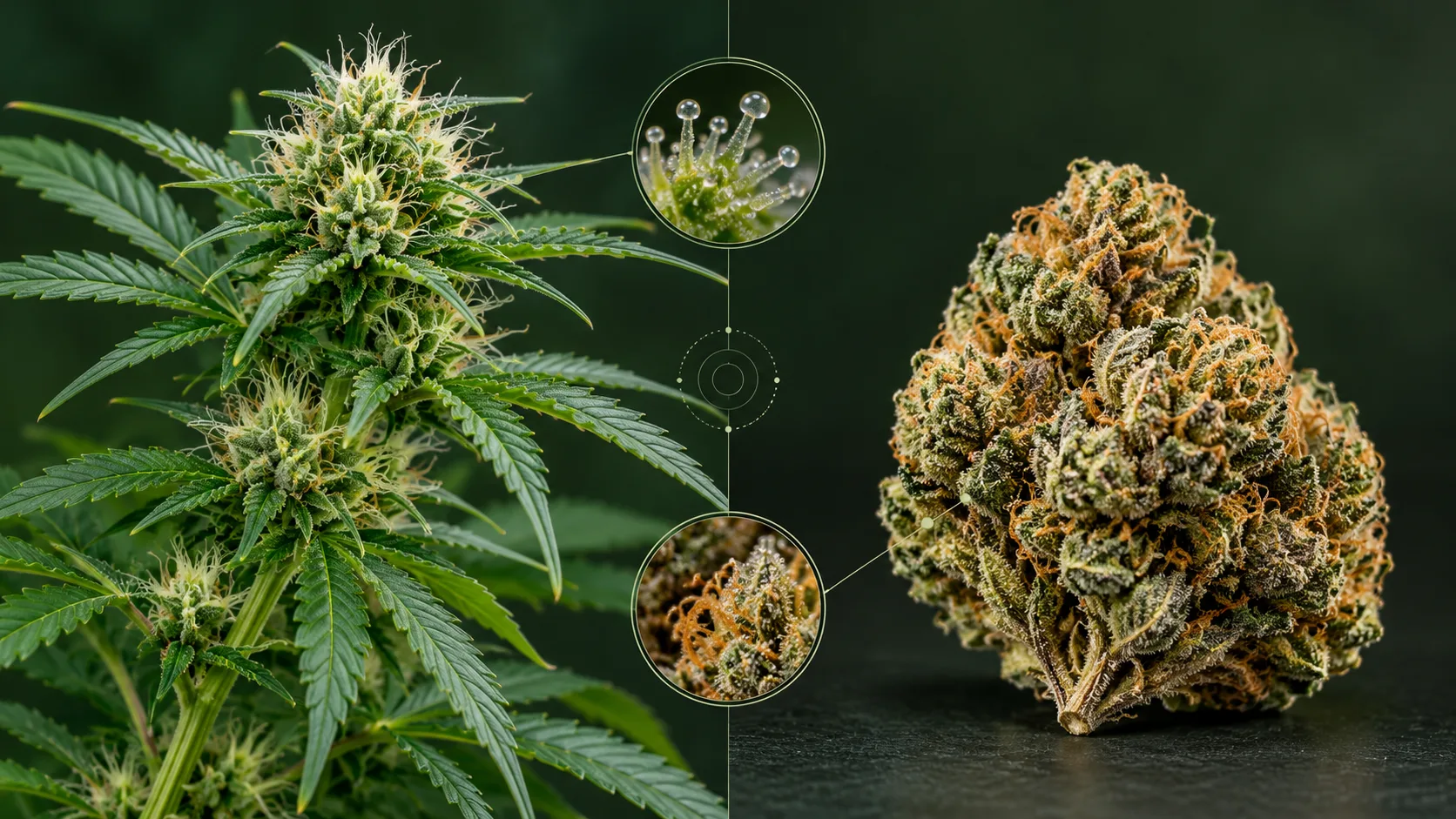
For KushScan, use dry flower. The app is designed to compare one clear photograph of a cured cannabis bud with examples in its supported strain catalog. A seedling, fan leaf, full plant, cola still on the plant, edible, oil, concentrate, or packaged product is a different input and should not be treated as equivalent.
What a cannabis plant identifier examines
A live-plant image can expose features that disappear before retail flower reaches a consumer:
- overall height, branching pattern, internode spacing, and canopy shape;
- leaf arrangement, leaflet count, edge shape, color, and signs of stress;
- vegetative versus flowering stage;
- male, female, or intersex reproductive structures when visible;
- cola formation, flower spacing, and how buds sit on the branch;
- possible nutrient, pest, disease, or environmental symptoms.
Those clues may help with botanical classification, cultivation questions, growth stage, or plant-health triage. They still do not guarantee an exact commercial strain name. Modern cannabis hybrids overlap heavily, and environment changes plant form.
What a bud identifier examines
Once flower is harvested, trimmed, dried, cured, packaged, and handled, the useful visual evidence changes. A dry-bud tool can compare:
- complete flower silhouette and density;
- bract clusters, visible stems, sugar leaves, and trim pattern;
- trichome coverage and surface texture;
- stigma color and distribution;
- green, purple, orange, amber, pale, or brown color balance;
- compression, dryness, handling damage, seeds, and possible surface problems.
See the bud identifier visual checklist for a clue-by-clue guide.
Plant identifier vs bud identifier
| Question | Live-plant identifier | Dry-bud identifier |
|---|---|---|
| Best input | Whole plant, branches, leaves, or flowers still growing | One intact cured cannabis flower |
| Main visual clues | Growth habit, leaves, internodes, reproductive structures | Bud shape, density, trichomes, pistils, color, trim |
| Common use | Botany, cultivation stage, plant sex, visible stress | Flower comparison, condition, likely catalog matches |
| Major limitation | Hybrid overlap and environmental variation | Harvest and post-harvest processing hide plant-level traits |
| Cannot verify | Exact genetics, measured chemistry, contaminants, legality, or personal effects from a photo alone | |
Why the same model should not treat both inputs alike
A model learns the patterns present in its training examples. If it was trained on dry cured flower, a live plant is outside that intended image distribution. Leaves, branches, soil, grow lights, and undeveloped flowers can dominate the frame while the dry-bud features the model expects are absent.
The reverse is also true. A plant-health tool may need full leaves, stems, growing conditions, and multiple views. A trimmed retail bud no longer contains much of that evidence. Matching the image to the tool's intended subject is part of responsible use.
Can either tool prove a strain?
No photo alone can provide the same evidence as reliable provenance or genetic testing. Commercial strain labels are inconsistent, seed-grown phenotypes vary, clones can be renamed, and cultivation changes appearance. Research on cannabis labeling has found same-name genetic outliers and overlapping groups.
A useful identifier therefore answers a comparison question: what known examples does this image resemble? For a deeper explanation, see how accurate weed strain identifier apps are.
Which image should you use with KushScan?
- Use one dry, intact cannabis bud.
- Place it against a plain surface in bright indirect light.
- Show the whole shape while keeping surface details sharp.
- Remove hands, packaging, labels, grinders, and other flower.
- Choose the single clearest candidate photo for the scan.
Do not submit a live plant, leaf, seedling, pre-harvest cola, oil, edible, concentrate, joint, or product label. Follow the full single-photo cannabis scanning guide for better input.
Use the right photo for KushScan
KushScan is a dry-flower identifier. Give it one sharp, neutral photo of a cured bud and read the output as a visual comparison within its supported strain catalog.
Download KushScanThe takeaway
Plant and bud identifiers are not interchangeable. Live plants reveal growth and cultivation features; cured buds reveal flower structure and post-harvest condition. Choose a tool trained for the subject in front of you, and remember that neither kind of photograph can certify genetics or laboratory chemistry.
Sources
- Frontiers in Plant Science: Architecture and Florogenesis in Female Cannabis sativa Plants, cannabis plant and flower development.
- Oregon State University Extension: Hemp Anatomy, illustrated vegetative and reproductive anatomy.
- Scientific Reports: Genetic tools weed out misconceptions of strain reliability in Cannabis sativa, research on strain-label reliability.
- Cannabis Chemovar Nomenclature Misrepresents Chemical and Genetic Diversity, strain-name and chemistry context.