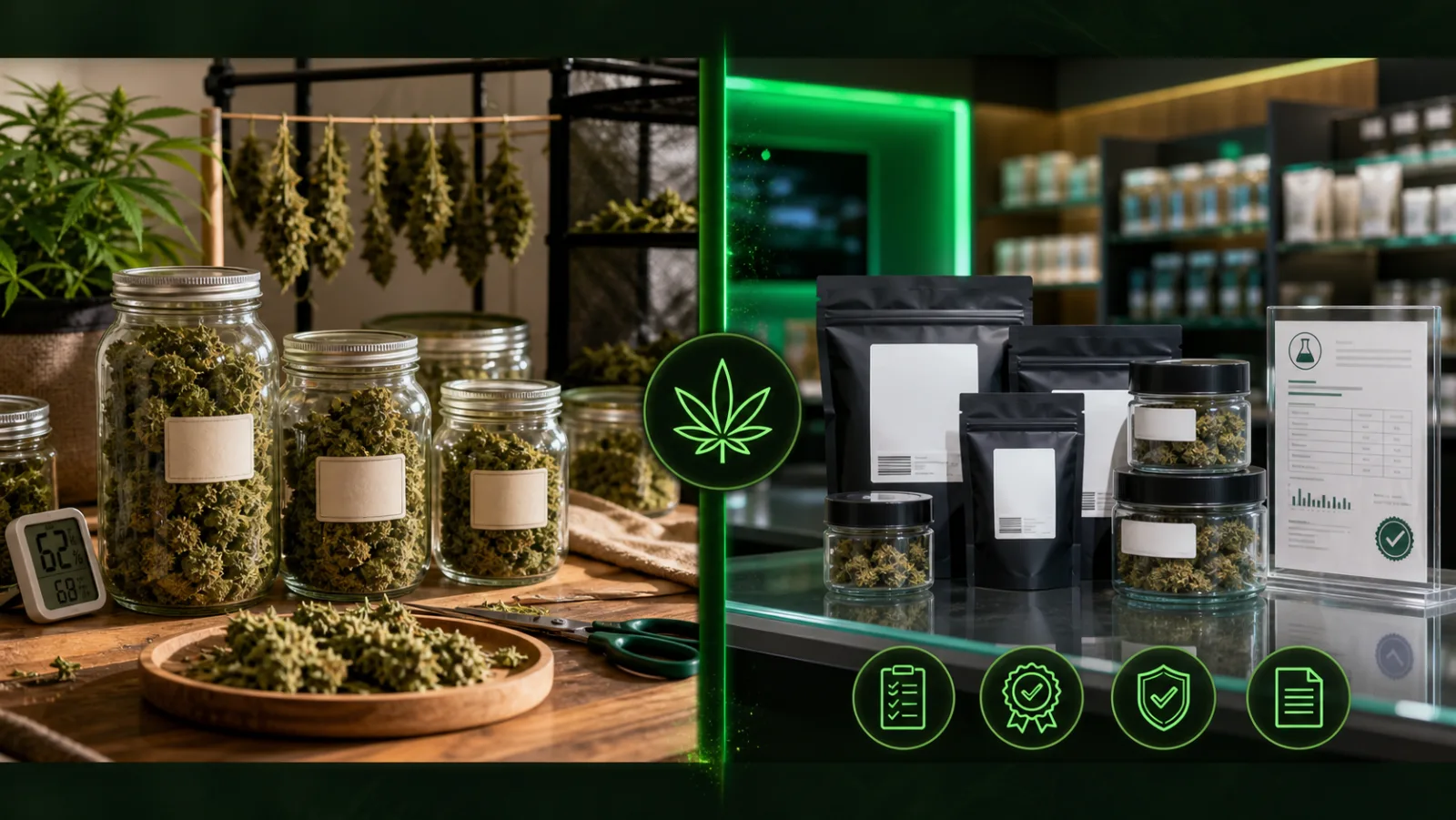
If you have ever opened a friend’s home-cured jar and then compared it with a sealed dispensary eighth, you know the difference can feel obvious. One may smell fresher and less processed. The other may come with cannabinoid percentages, harvest dates, batch numbers, and a certificate of analysis. Both can be excellent. Both can disappoint.
This guide breaks down the practical differences: flower quality, freshness, testing, contaminants, labels, strain confidence, and what tools like KushScan can help you notice from a clear dry-bud photo.
Homegrown vs dispensary weed: the quick difference
- Homegrown weed is cultivated outside the licensed retail supply chain, often by an individual grower for personal use where local law allows it.
- Dispensary weed is sold through a licensed retail market and usually passes state-required testing, labeling, packaging, and tracking rules before sale.
- Quality is not guaranteed by either label. Genetics, grower skill, harvest timing, drying, curing, storage, and testing standards all matter.
Think of it like food. A careful home cook can make something better than a mass-market product. But a regulated store product may offer traceability, labeling, and safety checks that a homemade version cannot prove.
Where homegrown weed can shine
Homegrown cannabis can be impressive when the grower understands the plant and cares about the full process. Small batches may get close attention during trimming, drying, curing, and storage. A skilled grower can harvest at the right time, avoid rough machine handling, and cure flower slowly enough to preserve aroma and texture.
Homegrown can also be fresher. If it is legal in your area and handled well, a home jar might move from harvest to cure to use without sitting in warehouses or retail inventory for months. That freshness can show up as lively aroma, a springy feel, visible resin, and less stale “hay” character.
The tradeoff is verification. Unless the grower pays for lab testing and keeps good records, you may not know the exact cannabinoid profile, terpene numbers, contaminant status, water activity, or whether the strain name is accurate.
Where dispensary weed has an advantage
Dispensary cannabis has one big advantage: documentation. In regulated markets, products are typically attached to a batch, license, package label, and lab test. California’s Department of Cannabis Control, for example, says cannabis goods must be tested before sale, with labs checking cannabinoids, terpenes, residual pesticides, heavy metals, microbial impurities, mycotoxins, moisture content, water activity, and foreign material.
That does not make every dispensary product perfect. Rules vary by state, labs can differ, and labels are not always as precise as consumers expect. But a real certificate of analysis gives you something homegrown flower usually lacks: a batch-specific paper trail.
How to read freshness clues in flower
Freshness is not the same as “wet.” Good cannabis flower should be properly dried and cured, not damp. Too much moisture can raise microbial risk; too little moisture can leave flower brittle, harsh, and aroma-poor.
Look for these practical clues:
- Aroma: clear, strain-appropriate aroma is a good sign; musty, ammonia-like, or moldy smells are red flags.
- Texture: flower should usually have some give, not crumble into dust or feel spongy-wet.
- Color: healthy greens, purples, orange pistils, or frosty surfaces can be normal; gray, fuzzy, or visibly moldy material should be avoided.
- Trim and handling: excessive shake, flattened buds, loose leaf, or broken trichomes can suggest rough post-harvest handling.
- Dates: dispensary labels may show harvest, package, or test dates. Newer is not always better, but very old flower deserves extra scrutiny.
Why lab testing matters more than bag appeal
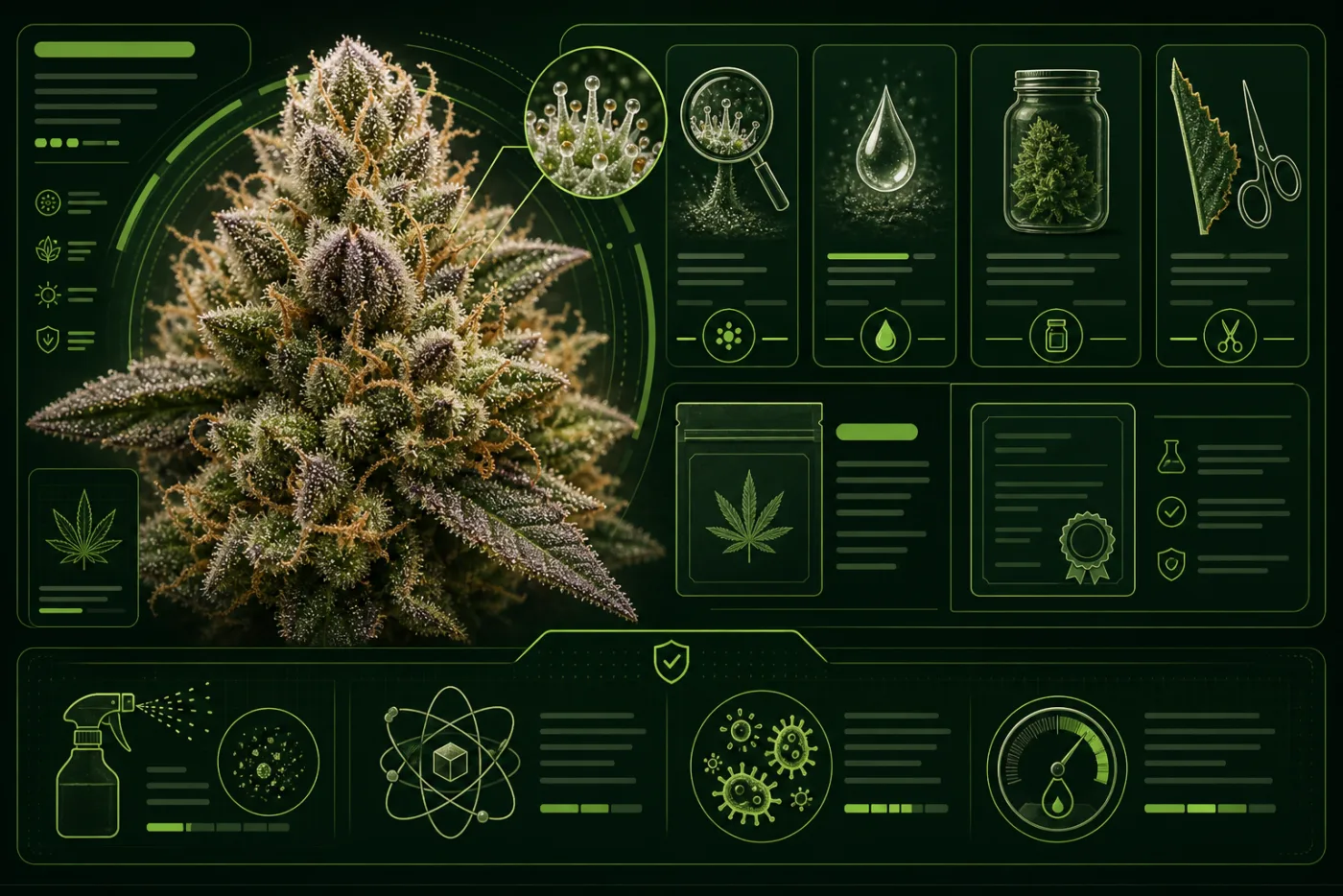
Beautiful cannabis can still fail a lab test. A frosty bud photo cannot reveal pesticides, heavy metals, microbial contamination, mycotoxins, residual solvents, water activity, or exact THC percentage. Those facts require sampling and analytical testing.
Testing also matters because cannabis flower is plant material. It can pick up issues from soil, water, nutrients, pest control, drying rooms, storage containers, and handling. Good home growers can reduce those risks, but without lab data you are still relying on trust.
Dispensary testing is not magic, either. Consumers should know that testing systems vary and label accuracy can be imperfect. A 2023 peer-reviewed PLOS ONE study of Colorado retail flower found observed THC potency was often lower than label values, with about 70% of sampled products more than 15% lower than the reported label potency. The lesson is not “never trust dispensaries”; it is “do not judge flower by THC percentage alone.”
Strain names are more fragile than people think
Homegrown strain names often depend on seed packs, clones, grower memory, and informal sharing. Dispensary strain names depend on producer records and marketplace naming, but commercial labels can still be messy. Two jars called “Gelato” may not share the same exact genetics, phenotype, terpene profile, or growing conditions.
That is why the modern cannabis world increasingly talks about chemovar — the chemical profile of a plant — instead of assuming a strain name tells the whole story. Name, photo, aroma, COA, and personal response all give different pieces of the puzzle.
What KushScan can help with
KushScan is useful when you want to compare visual flower clues: bud structure, color, trim, trichome coverage, and dry-flower appearance. That can help you learn the difference between dense commercial flower, looser sun-grown styles, well-cured home jars, and rougher material.
But visual identification has limits. KushScan cannot replace a lab report, detect invisible contaminants, or verify a label’s THC number from a photo. Use it as a smart visual layer alongside trustworthy sourcing, labels, COAs, and your own caution.
For better scanning results, use bright indirect light, avoid colored LEDs, photograph one dry bud sharply, and compare with our guide to taking better weed photos. If you want the bigger identification picture, see how to identify a weed strain by picture.
Homegrown quality checklist
If homegrown is legal where you are and you are evaluating a trusted grower’s flower, ask practical questions:
- Was the plant grown from known seeds or clones?
- Were pesticides, fungicides, or sprays used? If so, what exactly and when?
- How long was the flower dried and cured?
- Was it stored in clean, airtight containers away from heat, light, and excess humidity?
- Does it smell fresh rather than musty, grassy, or chemical?
- Is there any visible mold, powder, webbing, or foreign material?
If the answer is vague, slow down. Trust matters more with homegrown because there is usually less paperwork.
Dispensary quality checklist
For dispensary flower, use the retail system to your advantage:
- Check the COA when available, not just the front-label THC number.
- Look for test dates and package dates so you understand freshness and inventory age.
- Read cannabinoid and terpene context instead of chasing THC alone.
- Inspect packaging integrity and avoid products with broken seals or questionable storage.
- Compare price to quality because high THC and premium branding do not automatically mean better flower.
Safety and responsible use
Whether cannabis is homegrown or dispensary-bought, effects depend on dose, THC level, CBD content, terpene mix, tolerance, setting, route of use, and individual biology. CDC and NIH resources emphasize that cannabis can affect the body and brain, and higher-THC products may carry more risk for some people.
If you are new, returning after a break, or trying unfamiliar flower, start low and go slow. Avoid driving or risky tasks after use. If you use cannabis for a health condition, talk with a qualified clinician rather than treating a strain name or internet review as medical advice.
Compare flower visually with KushScan
KushScan helps you study dry cannabis flower photos for structure, color, trichome cues, and strain-pattern similarity — while keeping lab testing and responsible sourcing in the picture.
Download KushScanThe takeaway
Homegrown vs dispensary weed is really a question of trust and evidence. Homegrown can be fresher, more personal, and beautifully cured when the grower is skilled. Dispensary flower can offer labels, testing, batch records, and consumer protections. The smartest move is to combine your senses, photos, strain context, COAs, storage clues, and local legal rules before deciding what to trust.
Sources
- California Department of Cannabis Control: Testing laboratories, overview of required cannabis testing categories and Certificates of Analysis.
- PLOS ONE: “Uncomfortably high: Testing reveals inflated THC potency on retail Cannabis labels”, 2023 peer-reviewed study on THC label accuracy in retail flower samples.
- NIH NCCIH: Cannabis, Marijuana, and Cannabinoids — What You Need To Know, general cannabis and cannabinoid health context.
- CDC: Cannabis Health Effects, public health context on cannabis risks and impairment.
- FDA: Cannabis and cannabis-derived products, including CBD, consumer safety and quality concerns including contaminants and unsupported claims.