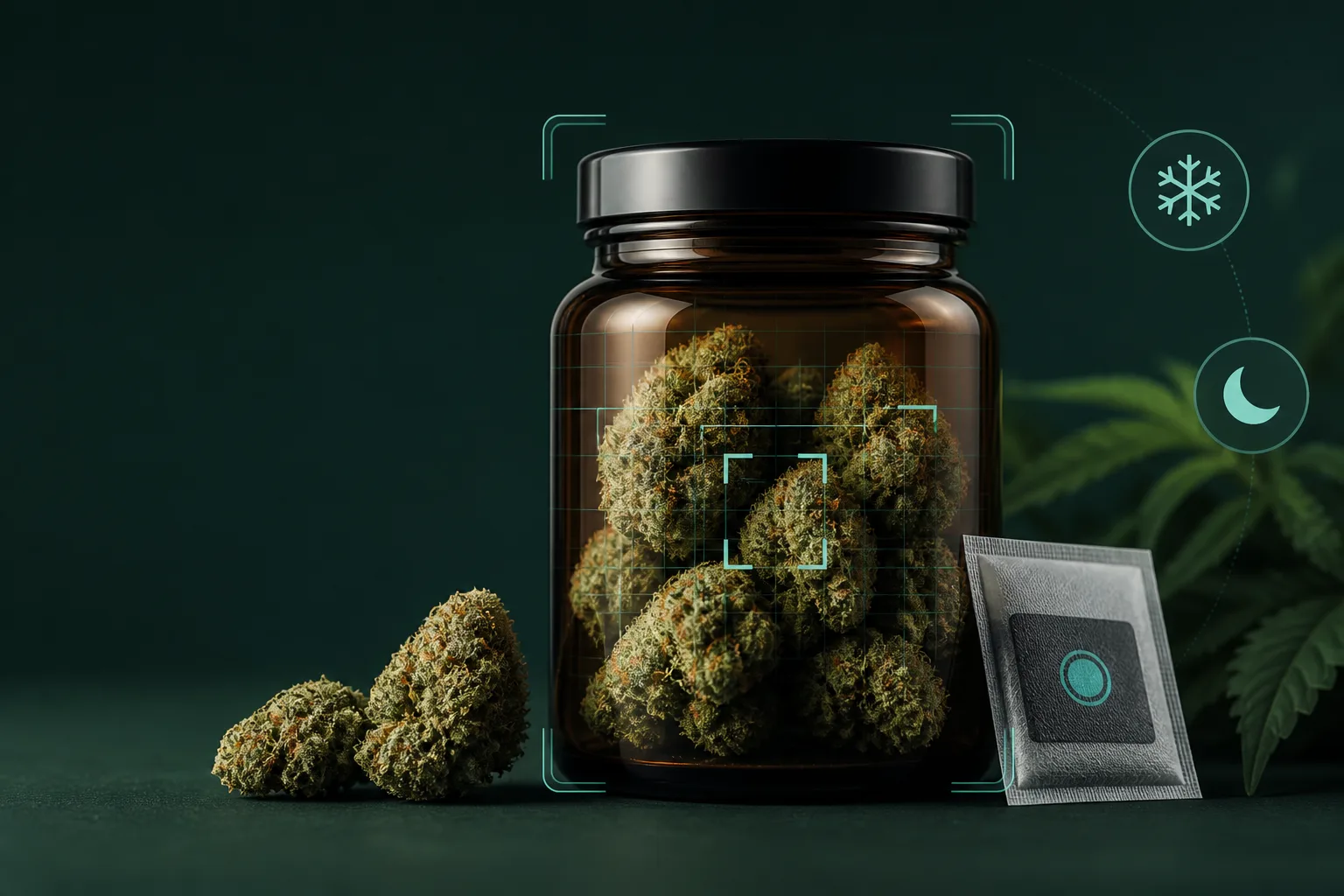
People usually notice bad storage after the flower has already changed. The aroma is flatter. The bud feels dusty or brittle. The color looks dull. Trichomes seem knocked off. In worse cases, moisture and poor airflow can create mold risk. By then, a photo can still show useful clues, but it cannot bring lost terpenes back or prove the product is safe.
This guide is for everyday cannabis flower storage: the jar on a shelf, the dispensary pouch you opened last week, or the sample you want to scan with KushScan before deciding what it resembles. It is not medical advice, legal advice, or a substitute for a Certificate of Analysis. Think of it as practical flower care.
How to store weed: the quick version
The best everyday setup is simple:
- Use an airtight glass jar. It limits air exchange and protects delicate flower better than a loose bag.
- Keep it dark. Light is one of the clearest drivers of cannabinoid degradation, especially over time.
- Keep it cool and stable. Avoid hot cars, sunny windows, heaters, and big temperature swings.
- Avoid extremes of humidity. Too dry can make flower brittle; too wet can raise mold risk.
- Handle it less. Trichomes are physical structures. Rough handling can knock resin off the bud.
- Keep batches separate and labeled. Mixing flower makes strain identification, freshness checks, and COA matching harder.
Those basics matter more than fancy storage gadgets. If you do only one thing today, move opened flower out of clear plastic and into a small, clean, airtight jar stored in a cool dark place.
Why cannabis changes during storage
Cannabis flower is not inert. It contains cannabinoids, terpenes, plant pigments, residual moisture, and fragile glandular trichomes. NIH cannabis explainers note that the plant contains many chemical substances, including THC, CBD, and more than 100 other cannabinoids. Peer-reviewed trichome research describes glandular trichomes on female flowers as major production and storage sites for cannabinoids and terpenes.
That is why storage is about preservation. THC can oxidize over time into cannabinol (CBN). Terpenes can evaporate or degrade, especially with heat and air exposure. Pigments can fade or brown. Buds can over-dry, compress, or absorb moisture from a bad environment. A jar is not magic; it just slows the chemistry and protects the structure.
Light: the easiest problem to fix
Older cannabinoid stability research found that cannabis preparations should be protected from light during storage, and light exposure remains one of the most consistent warnings in storage discussions. For consumers, the fix is not complicated: store cannabis in the dark.
Clear jars can look beautiful on a shelf, but they are better when kept inside a drawer, cabinet, box, or opaque bag. Amber glass helps reduce light exposure, but darkness is still the cleaner habit. Avoid leaving flower on a windowsill or in direct sun for photos. Take the picture, then put it away.
Heat: bad for aroma, freshness, and consistency
Heat speeds reactions and can make volatile compounds easier to lose. Anyone who has opened a hot car and smelled a flattened cannabis aroma understands this at a practical level. A short warm moment is not the same as months of bad storage, but repeated heat exposure is a quality tax.
A cool cabinet is usually enough for normal short-term flower storage. Avoid refrigerators for routine opened flower unless you really know why you are doing it: cold storage can introduce condensation when containers move between cold and warm air, and condensation is the kind of moisture problem you do not want on cannabis. Freezing may be used in some long-term laboratory or production contexts, but it can make trichomes brittle and is not the best everyday consumer move.
Air: oxygen and dry-out are quiet problems
Air exposure matters in two ways. First, oxygen supports oxidation reactions, including the gradual conversion of THC toward CBN. Second, a container with too much air exchange can dry flower out and make it harsher, less aromatic, and easier to crumble.
Use a container size that fits the amount of flower. A tiny amount sitting in a huge jar has more headspace than it needs. Do not open the jar every hour to smell it. If you bought cannabis in a resealable pouch, it may be acceptable for short-term storage, but a clean glass jar is usually better once the package is open.
Humidity: not too dry, not too wet
Moisture is the storage variable people get wrong in both directions. Over-dried flower becomes brittle. It can lose aroma quickly and shed trichome material during handling. Overly moist flower is more concerning because it can create conditions where mold or microbial growth becomes a risk.
Many cannabis consumers use two-way humidity packs marketed around the high-50s to low-60s relative humidity range. The exact number is less important than the principle: keep flower from becoming bone-dry, but never try to “revive” questionable cannabis by adding fruit peels, wet paper, or random moisture sources. That can introduce contamination and uneven wet spots.
If cannabis smells musty, looks fuzzy, feels damp, or shows gray-white webby patches, storage advice is no longer the solution. Read our guide to moldy weed vs trichomes and treat suspicious flower cautiously.
Plastic bags, jars, and original packaging
Original packaging is useful because it carries batch information, labels, dates, and sometimes a QR code for a COA. Do not throw that context away if you care about identification or verification. But once a package is open, the best storage container depends on how well it protects the flower.
- Thin plastic bag: convenient, but easy to crush, static-prone, and not ideal for longer storage.
- Dispensary pouch: better than a loose bag, especially if opaque and resealable, but still not as protective as a rigid jar.
- Glass jar: the best everyday choice for opened dry flower, especially when kept dark and not overfilled.
- Clear display jar: fine for a photo, weaker for storage if it lives in the light.
Keep the label or take a clear label photo before moving flower into a jar. That helps you match the bud to its strain name, harvest or packaging date, and lab report later.
How storage changes weed photos
Storage affects what a camera sees. Fresh, well-kept flower tends to show clearer trichome sparkle, more distinct pistils, more natural color, and better surface texture. Poorly stored flower can look flat, brown, dusty, compressed, or overly dry. That can influence human judgment and app-based visual comparison.
KushScan can help analyze dry flower photos for visible strain-style clues, but it cannot know the full storage history from an image. A good scan works best when the bud is photographed under neutral light, against a plain background, as one sharp frame. For more photo setup tips, see how to take better weed photos.
Do not use storage to hide quality problems
Good storage preserves. It does not sanitize contaminated flower, prove potency, or repair misleading labels. FDA consumer updates continue to emphasize quality, safety, and unproven-claim concerns around many cannabis-derived products. State-regulated cannabis testing and COAs exist because visual inspection has limits.
If a product is important enough to verify, use the full context: package label, batch number, COA, dispensary source, smell, texture, and visual inspection. Our guide to how to read a cannabis COA explains what lab reports can add that storage and photos cannot.
Scan flower while the visual clues are still clear
Well-stored cannabis is easier to photograph and compare. Use KushScan with one sharp dry-flower photo, then check the result against the label, batch details, and COA when available.
Download KushScanThe takeaway
How to store weed comes down to protecting the flower from light, heat, air, rough handling, and moisture extremes. Use a small airtight glass jar, keep it cool and dark, preserve labels and batch context, and do not trust storage tricks to solve mold, contamination, or potency questions. Better storage means better freshness clues — not certainty.
Sources
- PubMed: The stability of cannabis and its preparations on storage, classic cannabinoid stability study emphasizing protection from light and storage-condition effects.
- Cannabis Glandular Trichomes: A Cellular Metabolite Factory, peer-reviewed review of trichomes as cannabinoid and terpene production/storage sites.
- NIH NCCIH: Cannabis, Marijuana, and Cannabinoids — What You Need To Know, overview of cannabis chemistry and cannabinoids.
- FDA: Cannabis and Cannabis-Derived Products, Including CBD, consumer update on quality, safety, and unproven product claims.