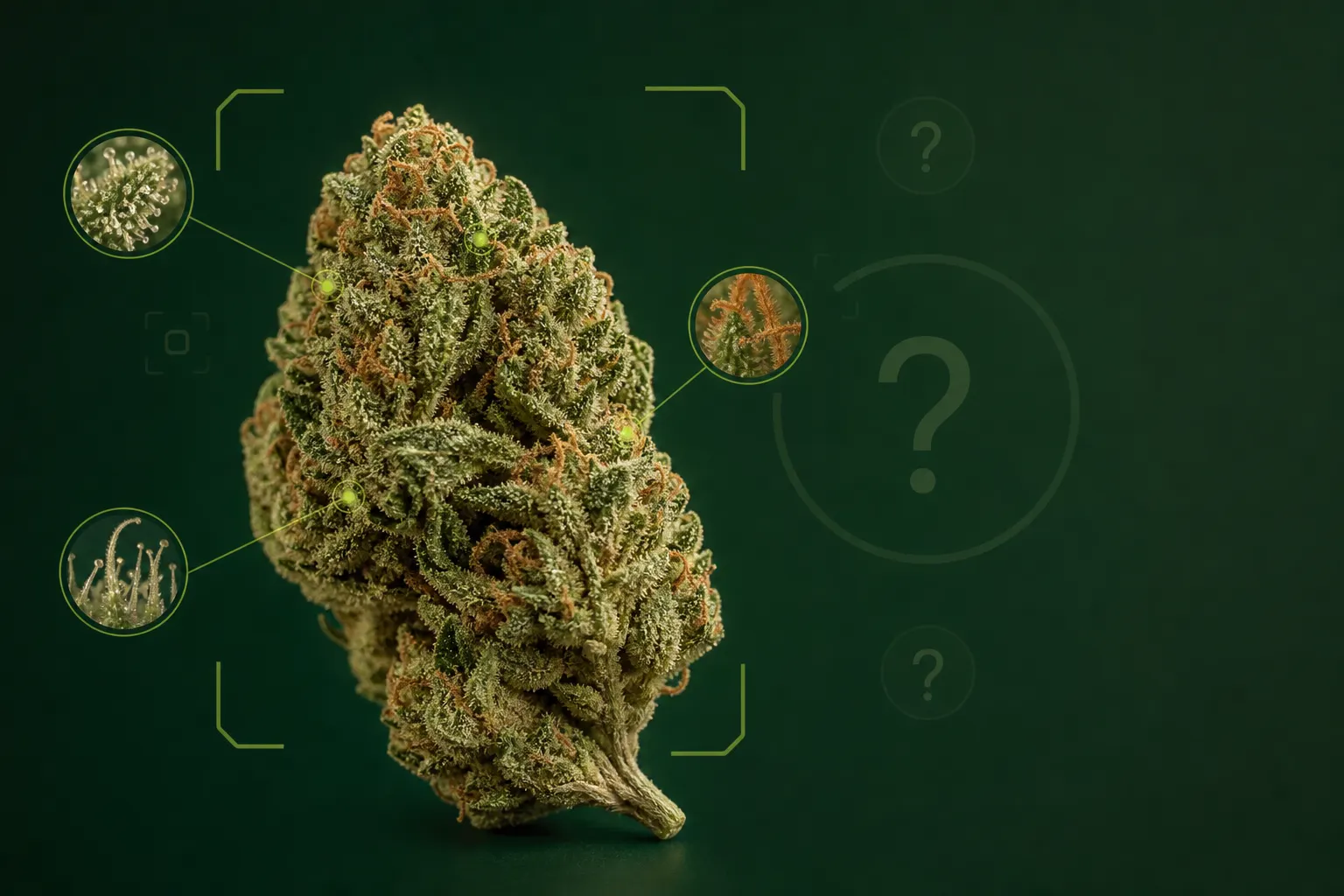
The practical answer sits between two extremes. On one side, anyone claiming they can name every strain from a single nug photo with total certainty is overselling it. On the other side, photos are not useless: trained eyes and image-recognition tools can compare visible patterns against known examples and narrow the possibilities.
Think of cannabis photo identification like recognizing a dog breed from a picture. You might confidently spot a husky-like look, but the photo alone will not tell you the full pedigree, health history, or DNA test. Cannabis has the same problem, plus decades of inconsistent strain names and heavy hybridization.
Identify weed strain by picture: start with photo quality
The best weed scanner in the world still needs a readable image. Blurry, yellow, overexposed, or tiny photos hide the very details that make flower recognizable.
- Use bright indirect light: daylight near a window is usually better than harsh flash.
- Fill the frame: show one dry flower bud close enough to see texture, but not so close that the camera cannot focus.
- Keep the background simple: a plain surface helps the bud stand out.
- Avoid filters: heavy color edits can make green, purple, orange, and amber tones misleading.
- Take more than one angle: a top view and side view can reveal different structure.
For a deeper setup checklist, see our guide to taking better weed photos for cannabis strain identification.
What a cannabis photo can show
A good picture can reveal several useful clues. None of these confirms a strain alone, but together they create a stronger visual fingerprint.
Bud structure
Some flower looks long, airy, and spear-shaped. Some looks compact, chunky, and dense. Some has foxtailing, rounded clusters, loose calyxes, or tight machine-trimmed edges. Structure can hint at broad cultivar style, grow conditions, and handling.
Trichome coverage
Trichomes are the tiny resin glands that can make flower look frosty. Heavy visible trichome coverage may suggest resin-rich cannabis, but it does not let you calculate THC with your eyes. For actual potency, look for a recent label or certificate of analysis.
Color and pistils
Green shade, purple expression, orange pistils, amber tones, and overall brightness can help compare flower against known strain photos. But color is tricky: lighting, camera settings, plant genetics, temperature during growth, curing, and age can all change how cannabis looks.
Freshness and condition
Pictures can show signs of dryness, old flower, rough handling, excess stems, loose trim, visible seeds, powdery-looking material, or possible mold. If anything looks unsafe or contaminated, do not treat an app match as a safety clearance.
What a picture cannot prove
The biggest mistake is confusing visual similarity with verified identity. A photo cannot reliably prove:
- the exact strain name printed on a jar;
- THC, THCA, CBD, CBG, or total cannabinoid percentages;
- terpene profile or aroma chemistry;
- whether the product is hemp or marijuana under a specific law;
- whether the flower passed pesticide, microbial, heavy-metal, or residual-solvent testing;
- how strongly it will affect you personally.
This is why legal-market labels and lab reports matter. Visual analysis can help with recognition and education; chemistry requires chemistry.
Why exact strain names are messy
Cannabis strain names are not as standardized as apple varieties or pharmaceutical names. The same name can appear on products with different genetics or chemical profiles. Different growers may also use familiar names because they sell, even when the flower is not identical to another product with the same label.
Researchers increasingly use the word chemovar when they mean a chemically defined cannabis type. That shift matters because two buds with similar names may differ in cannabinoids and terpenes, while two products with different names may be chemically closer than expected. For consumers, the lesson is simple: use strain names as helpful labels, not laboratory facts.
Can AI identify cannabis from photos?
AI can compare visual patterns at scale: shape, texture, color distribution, trichome appearance, and other image features. That can be useful when you want likely matches, category clues, or a second opinion. It is especially helpful when a database contains many labeled examples and the input photo is sharp.
But AI should be framed honestly. A cannabis photo model can estimate and rank possibilities; it should not pretend to replace a licensed lab, a regulator, or a verified chain of custody. If a tool gives probabilities, treat them like probabilities — not certificates.
How KushScan fits into the process
KushScan is built for dry flower photo recognition. It helps analyze visible features and returns practical strain-style information, including likely matches, sativa/indica ratio, and estimated THC level. The app is most useful when you want to compare what is in front of you with a large cannabis image database.
The honest workflow is:
- Scan the flower: use KushScan with a clean, well-lit image.
- Compare the result: check whether the suggested strain family, structure, and appearance make sense.
- Read the label or COA: use lab data for cannabinoids, terpenes, and safety testing when available.
- Stay cautious: effects vary by dose, tolerance, product age, and your own body.
A quick visual checklist before you scan
- Is the flower dry and in focus? KushScan is designed around dry flower photos, not live plants, oils, edibles, or concentrates.
- Can you see texture? Trichomes, calyxes, pistils, and leaf edges should be visible.
- Is the color realistic? Avoid colored LEDs, strong yellow bulbs, and heavy flash glare.
- Is there only one main subject? Multiple buds in a pile can confuse the read.
- Is there a label nearby? Scan the flower, but keep packaging information separate so you can compare later.
When a photo match is most useful
Photo identification is best for curiosity, education, and comparison. It can help you learn why one flower looks dense and resinous, why another looks airy or leafy, and why classic strain families often share visual tendencies. It can also help when you are trying to remember what a sample might be or compare unlabeled flower against known examples.
It is less useful when you need proof. Medical decisions, legal classification, safety testing, and exact potency should not rest on visual identification. If the stakes are high, use regulated products with batch-specific testing and talk to a qualified professional when health questions are involved.
Try a weed strain identifier by picture
Use KushScan to analyze a clear dry-flower photo, compare likely strain matches, and learn what visible cannabis features can tell you — without pretending a photo replaces lab testing.
Download KushScanThe takeaway
You can identify a weed strain by picture only in the practical, probability-based sense: the image can support a smart guess, reveal quality clues, and narrow the search. It cannot certify exact genetics or chemistry. The best approach is to combine a good photo, a realistic weed scanner result, and trustworthy product testing when available.
Sources
- Cannabis and Cannabinoid Research: Cannabis Chemovar Nomenclature Misrepresents Chemical and Genetic Diversity, research on how strain names can misrepresent chemical and genetic diversity.
- PubMed record for Cannabis Chemovar Nomenclature Misrepresents Chemical and Genetic Diversity, indexed publication details.
- NCCIH: Cannabis, Marijuana, and Cannabinoids — What You Need To Know, NIH consumer overview of cannabis, THC, CBD, and cannabinoids.
- FDA: What You Need to Know About Cannabis and Cannabis-Derived Products, Including CBD, safety, quality, and labeling concerns for cannabis-derived products.
- New York Office of Cannabis Management: How to Read a Certificate of Analysis, regulator guide to matching COAs with product and batch information.