Some cannabis names describe flavor. Others point to a place, a breeder, or a pop-culture reference. Jack Herer is different: the cultivar was named for a real activist whose writing and organizing became part of modern cannabis history. That connection gave the strain an unusually durable identity, while the plant itself became known for combining narrow-leaf growth traits with dense, resinous flower.
The useful way to understand Jack Herer is to separate three layers: the original Sensi Seeds breeding story, the traits commonly associated with the cultivar, and the much messier reality of products sold under the same name today.
Jack Herer strain explained in 60 seconds
- Breeder: Sensi Seeds in the Netherlands.
- Reported lineage: Haze, Northern Lights #5, and Shiva Skunk. The exact breeding sequence is not publicly documented in enough detail to treat every online family tree as proven.
- Public debut: Sensi Seeds places the cultivar’s launch in 1994, after development beginning in the late 1980s.
- Namesake: American cannabis and hemp activist and author Jack Herer (1939–2010).
- Common aroma language: Pine, spice, wood, citrus, herbs, and skunk, with meaningful variation among phenotypes and batches.
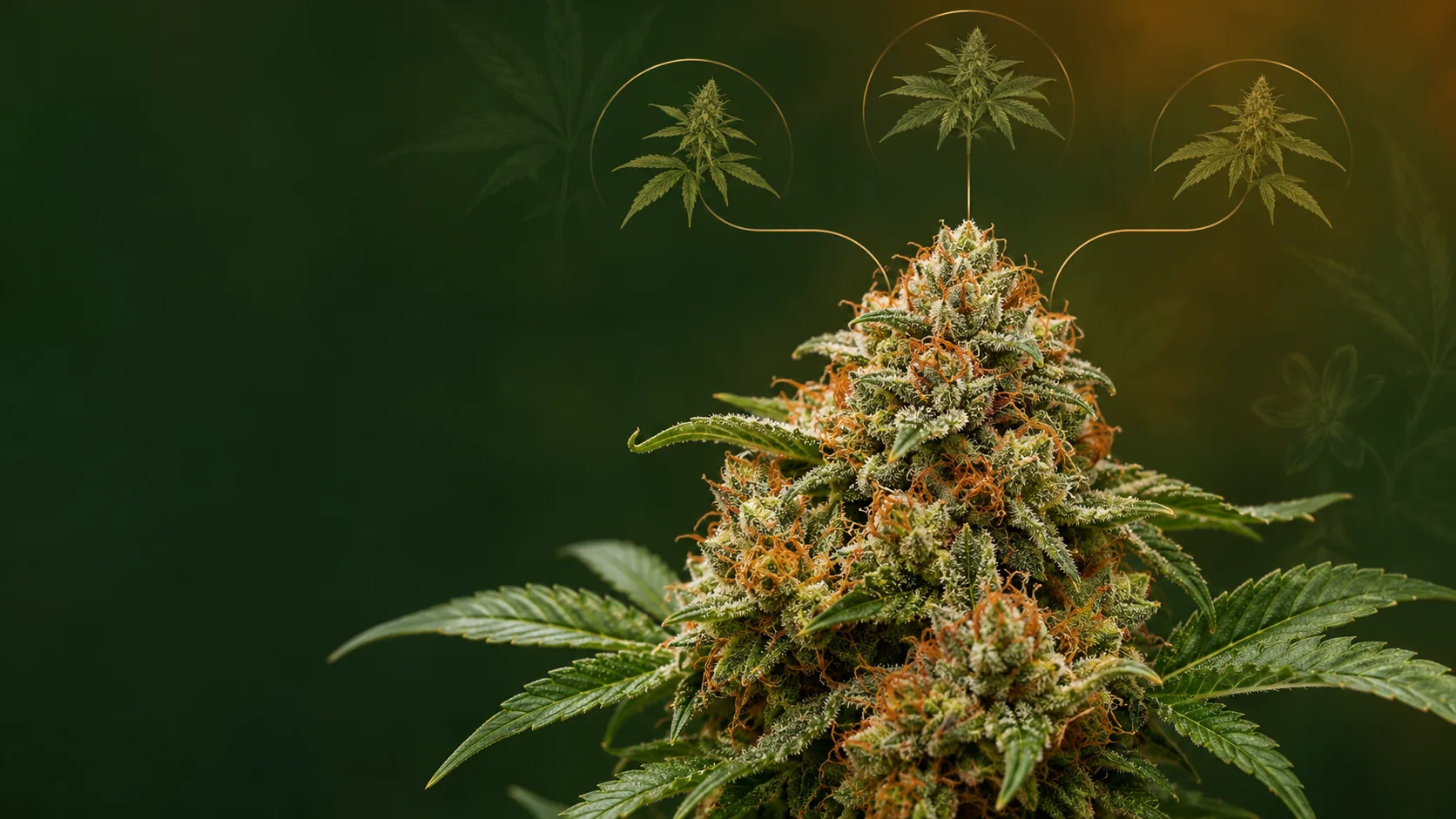
- Common appearance: Green, resinous flower with orange-to-brown stigmas, often forming elongated or spear-shaped clusters rather than perfectly round buds.
- Important limit: A label, aroma, leaf shape, or flower photo cannot prove genetics, chemistry, potency, safety, or effects.
Who was Jack Herer?
Jack Herer was an American cannabis and hemp activist best known for The Emperor Wears No Clothes, first published in the 1980s. The book argued for broader recognition of hemp and challenged cannabis prohibition. Whatever one thinks of every historical claim in the book, its cultural influence is clear: Herer became one of the most recognizable figures in the legalization movement before his death in 2010.
Sensi Seeds named its cultivar in his honor. That was more than a marketing flourish. It connected a Dutch breeding project to an American activist and gave consumers a memorable story at a time when modern seed-bank culture and Amsterdam’s cannabis scene were expanding internationally.
The person and the plant should not be confused. Jack Herer’s historical importance does not establish the genetics or quality of a product carrying his name, and a discussion of the cultivar does not validate every political or industrial claim made in his writing.
What are the reported Jack Herer genetics?
Sensi Seeds identifies three genetic building blocks: Haze, Northern Lights #5, and Shiva Skunk. Each represented a major breeding family by the late twentieth century:
- Haze contributed the narrow-leaf, long-flowering side of the family and the spicy, incense-like vocabulary commonly attached to Jack Herer descriptions.
- Northern Lights #5 was prized in many breeding projects for resin production, compact structure, and indoor-growing practicality.
- Shiva Skunk combined Northern Lights #5 with Skunk #1, adding another layer of dense growth and pungent aroma associations.
Those names describe reported ancestry, not a DNA certificate. Even the breeder’s public materials focus on the three contributing families rather than disclosing a complete breeding ledger. Online diagrams sometimes present one exact cross order as settled fact, but the cautious description is a multi-hybrid developed from those three lines.
There is another reason to be careful: seeds from a multi-hybrid cross do not produce identical plants. Sensi Seeds describes several phenotypic expressions within Jack Herer, including plants leaning toward Haze-like growth and others showing more compact characteristics. Selection and cloning can preserve a favored plant, while seed-grown siblings retain variation.
Why did Jack Herer become a cannabis classic?
Timing helped. The cultivar arrived during the 1990s, when Amsterdam seed banks and competitions were turning once-local breeding work into internationally recognized strain names. Jack Herer combined several already important genetic families and attached them to a name with cultural meaning.
Its reputation also crossed different audiences. Growers encountered a complex hybrid with multiple expressions. Consumers encountered a distinct name and a profile often described as bright, spicy, piney, and resinous. Breeders used Jack Herer in later crosses, creating descendants and name variations such as Jack Flash, Jack the Ripper, and many “Jack” hybrids. Not every strain using “Jack” is necessarily a documented descendant, but the naming pattern shows the original’s influence.
Longevity is the strongest evidence of its status. Many cultivar names enjoy a short burst of attention. Jack Herer has remained recognizable across several decades, markets, and generations of breeding—even as the meaning of the name has become less uniform.
What does Jack Herer flower look and smell like?
Jack Herer flower is commonly shown as medium-to-light green with abundant glandular trichomes and orange or brown stigmas. Individual bracts may stack into pointed, somewhat elongated flowers, although compact examples also appear. This range makes sense for a multi-hybrid with several phenotypes.
Aroma descriptions often use pine, peppery spice, wood, citrus peel, herbs, and skunk. These comparisons are useful for describing an experience, but they are not a guaranteed terpene formula. Cultivation conditions, harvest timing, drying, curing, storage, and the selected phenotype can all change the final aromatic profile.
Color and resin deserve similar caution. Pale green flower is not automatically Jack Herer, and a frosty surface does not prove high THC. Trichomes contain cannabinoids and aromatic compounds, but a photograph cannot measure their chemistry. Exact potency and a batch’s reported terpene profile require appropriate laboratory testing.
Can you identify the Jack Herer strain by picture?
A photo can show whether flower has traits compatible with common Jack Herer examples. Look for:
- Green flower with visible, intact trichome coverage.
- Orange-to-brown stigmas winding between the bracts.
- An elongated, spear-like or irregular hybrid structure rather than assuming every flower must be round and compact.
- Condition clues such as trim, dryness, age, handling damage, or suspicious fuzzy growth.
None of these clues is exclusive. Many unrelated cultivars can share the same structure and colors, while authentic seed-grown Jack Herer siblings can look different. Camera white balance, flash, filters, magnification, and compression add another layer of uncertainty.
The strongest identification combines visual comparison with packaging, producer information, batch records, and credible provenance. If the question is chemistry rather than identity, use the product label and a batch-specific Certificate of Analysis. Our weed strain identification guide explains how to rank these evidence layers.
Why Jack Herer labels may not all mean the same thing
Peer-reviewed genetic and chemical research supports a general warning about cannabis names. Studies have found genetic differences among samples sold under the same strain name, and large analyses of commercial flower show that names vary in chemical consistency. A familiar label may reflect genuine shared ancestry, a seed-derived version, a local clone, a later reproduction, or simple relabeling.
That does not make the name useless. “Jack Herer” still carries historical and sensory context. It simply means the name should begin an investigation rather than end one. Two products can both carry the label while differing in cannabinoid content, aroma, flower shape, freshness, and subjective experience.
Effects are especially difficult to standardize. Dose, route of use, individual tolerance, other substances or medicines, and setting all matter. Broad claims that a named strain will reliably create one mood or provide a medical outcome go beyond what a cultivar name can establish.
How to evaluate a Jack Herer-labeled product
- Ask what form it is. A clone, a seed-grown Jack Herer plant, and a Jack Herer cross are not interchangeable.
- Read the complete label. Check the producer, batch number, package date, cannabinoid values, and any batch-specific terpene results.
- Inspect condition before identity. Freshness, moisture, broken trichomes, contamination clues, and storage may matter more than matching a classic photo.
- Use aroma as supporting evidence. Pine and spice can fit the profile, but cannot establish ancestry or purity.
- Separate appearance from potency. Frosty flower may be visually impressive; it is not a THC test.
- Keep claims proportional. “Looks compatible with Jack Herer” is more defensible than “this photo proves it is Jack Herer.”
Where KushScan fits
KushScan can make visual comparison more systematic. A sharp, neutrally lit photo helps the app examine flower shape, color, visible trichomes, stigmas, and trim against supported reference examples. That can surface a plausible match and give you better language for describing an unknown flower.
It cannot confirm a Sensi Seeds pedigree, identify a specific phenotype with certainty, measure cannabinoids or terpenes, or screen for contaminants. Treat a scan as one visual clue alongside provenance, labeling, aroma, and laboratory data.
Compare cannabis flower with KushScan
Photograph one dry flower in neutral light, fill the frame, keep the subject sharp, and compare visible traits—while treating the result as a likely visual match, not genetic authentication.
Download KushScanThe takeaway
The Jack Herer strain endures because it joins influential reported genetics with an unusually meaningful name. Haze, Northern Lights #5, and Shiva Skunk provide the breeding context; the activist Jack Herer provides the cultural context. Neither context turns a modern retail label into proof. Enjoy the history, compare the visible and aromatic clues, then rely on batch records and testing for questions a strain name or photo cannot answer.
Sources
- Sensi Seeds: 40 Years of Sensi Seeds, used for the breeder’s account of Jack Herer’s 1994 launch and long-term place in its catalog.
- Sensi Seeds: Jack Herer Feminized Grow Report, used for the breeder’s reported Haze, Northern Lights #5, and Shiva Skunk genetics and phenotype context.
- Los Angeles Times: Jack Herer dies at 70, used for biographical context on the activist and author for whom the cultivar was named.
- PLOS ONE: The phytochemical diversity of commercial Cannabis in the United States, peer-reviewed research on chemical diversity and the variable consistency of commercial strain names.
- Frontiers in Psychology: Human olfactory discrimination of genetic variation within Cannabis strains, peer-reviewed research on genetic inconsistency and aroma among same-name samples.
- NIH NCCIH: Cannabis, Marijuana, and Cannabinoids—What You Need To Know, federal health context for responsible claims about cannabis and cannabinoids.