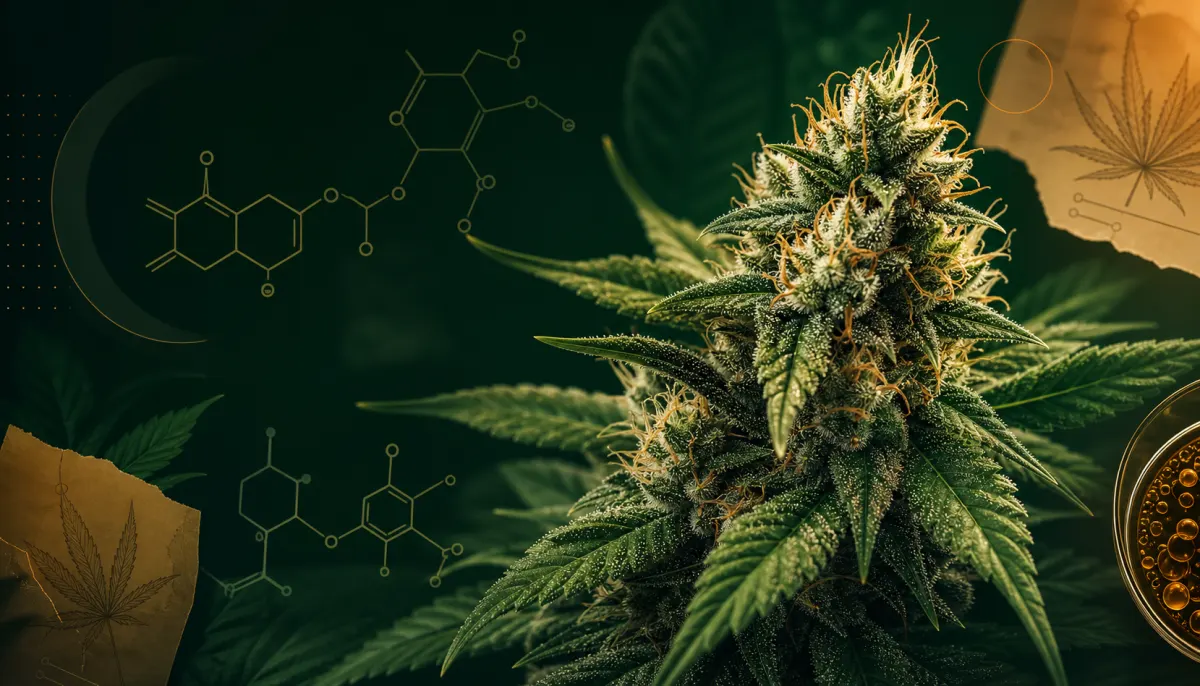
The short version: THCA is the acidic cannabinoid commonly found in raw cannabis flower. THC, especially delta-9 THC, is the intoxicating cannabinoid most people mean when they talk about cannabis potency. Heat, time, and processing can convert THCA into THC through a reaction called decarboxylation.
What is THCA?
THCA stands for tetrahydrocannabinolic acid. In fresh or carefully dried cannabis, much of the potential THC is still present as THCA. That matters because THCA is not the same thing as delta-9 THC on a label, in a lab report, or in your body.
Raw cannabis chemistry is one reason flower labels often list several numbers: THCA, delta-9 THC, and sometimes “total THC.” The total figure tries to estimate how much THC could be available after decarboxylation, not simply what is present as active delta-9 THC at that moment.
What is THC?
THC usually refers to delta-9-tetrahydrocannabinol, the primary intoxicating cannabinoid in cannabis. It interacts with cannabinoid receptors in the body and is strongly associated with the “high” people expect from marijuana. Effects vary by dose, tolerance, product type, and individual biology.
That is why two flowers with similar THC potential can still feel different. Terpenes, other cannabinoids, freshness, moisture, cure quality, and consumption method all shape the experience.
THCA vs THC: how heat changes cannabis
The key bridge between THCA and THC is decarboxylation. When cannabis is heated — for example by smoking, vaping, baking, or controlled extraction — acidic cannabinoids can lose a carboxyl group and become neutral cannabinoids such as THC, CBD, or CBG.
Peer-reviewed decarboxylation research shows that temperature and time both matter. Higher heat usually speeds the conversion, but too much heat or too long a process can degrade cannabinoids and change the final profile. That is why edible recipes, extraction labs, and cannabis testing all care about controlled heat.
Why cannabis labels use “total THC”
Many dispensary labels and certificates of analysis use a total THC calculation because THCA does not convert to THC at a perfect one-to-one weight ratio. A common simplified formula is:
Total THC ≈ delta-9 THC + (THCA × 0.877)
The 0.877 factor accounts for the mass lost during decarboxylation. In plain English: if a flower is high in THCA but low in delta-9 THC, it can still have high THC potential once heated.
Can you tell THCA or THC by looking at weed?
Not precisely. A frosty nug with dense trichomes can suggest resin production and quality, but a photo cannot replace a lab test. Visual tools can help with strain-style recognition, flower condition, color, structure, and practical screening — not certified cannabinoid measurement.
That is the right way to think about THC percentage and photo-based cannabis tools. KushScan analyzes visible dry-flower features to estimate strain probability, sativa/indica ratio, and THC level, but lab testing remains the standard for verified potency.
Practical takeaways for consumers
- Raw flower is not automatically “active” in the same way heated flower is. Much of its THC potential may be present as THCA.
- Heating cannabis changes chemistry. Smoking, vaping, cooking, and extraction can convert acidic cannabinoids into neutral cannabinoids.
- Total THC is an estimate, not a vibe check. It is useful, but it does not predict your exact experience.
- Photos cannot verify potency. Use lab-tested labels or COAs when accuracy matters.
- Start low if you are unsure. Strong products, concentrates, and edibles can be uncomfortable for inexperienced consumers.
Where KushScan fits
If you are trying to understand a dry flower sample visually, KushScan can help identify likely strain matches and estimate THC range from a clear photo. For best results, take one sharp image in natural light, avoid heavy flash glare, and keep the nug in focus. For technique, see our guide to better weed photos for strain identification.
Scan your cannabis flower
Use KushScan as an educational weed scanner for strain probability, visual classification, and estimated THC range from a dry flower photo.
Download KushScanSources
- Decarboxylation Study of Acidic Cannabinoids, peer-reviewed article available through PubMed Central.
- National Institute on Drug Abuse: Cannabis (Marijuana), overview of cannabis and THC effects.
- National Academies / NCBI Bookshelf: The Health Effects of Cannabis and Cannabinoids, evidence review context for cannabinoids.
- FDA: Regulation of Cannabis and Cannabis-Derived Products, regulatory context for cannabis-derived products.