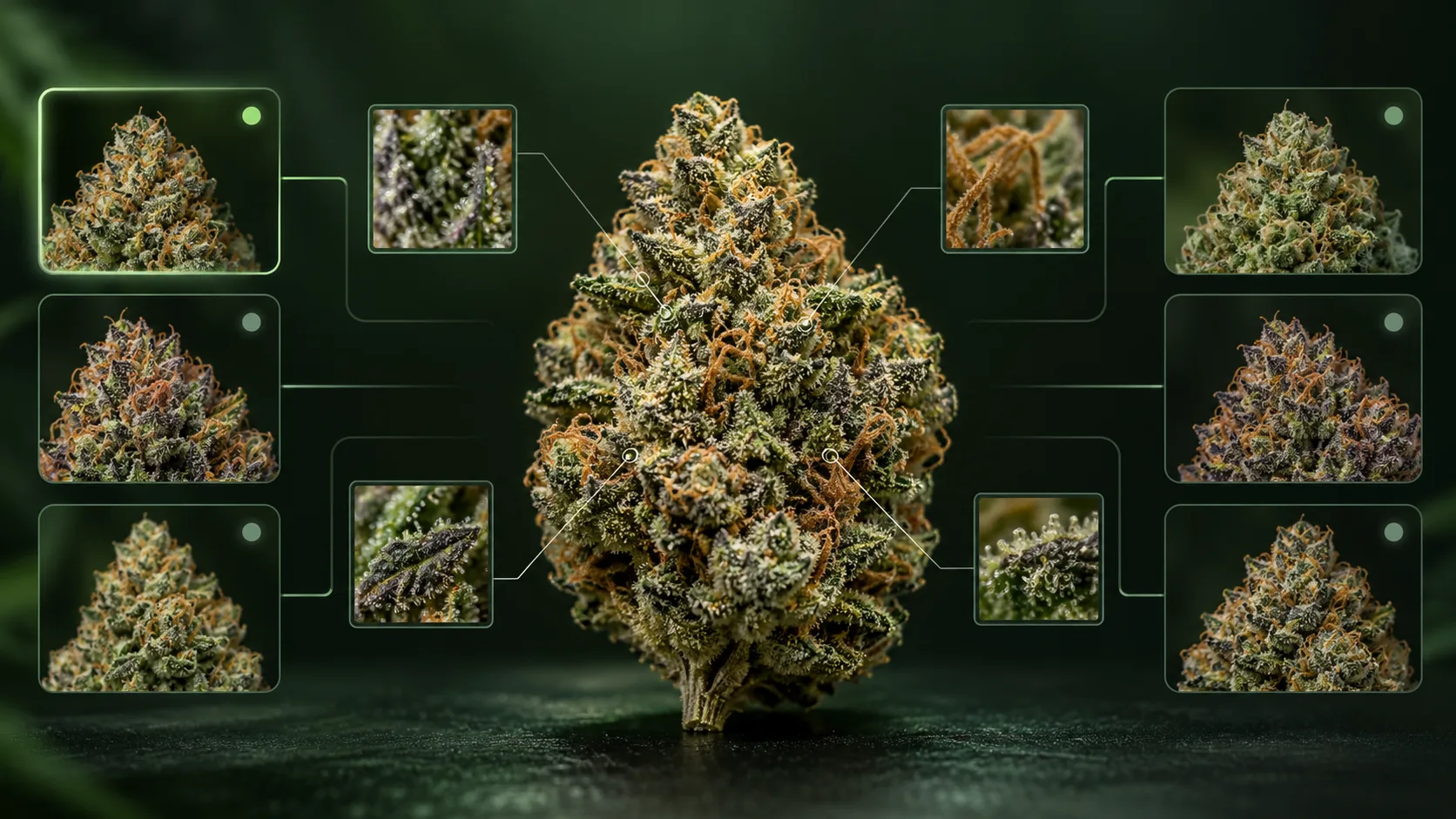
Short answer: a good app can provide a useful probability-based comparison within the strains it knows. It cannot prove genetics, breeder lineage, cannabinoid percentages, terpene content, contaminants, or personal effects from pixels alone.
The most honest way to judge an identifier is to ask a narrower question: How well does this photo resemble examples in the app's catalog? That question can be answered visually. “What exact strain is this?” may require reliable provenance or genetic information, while “What is its THC percentage?” requires appropriate laboratory testing.
What accuracy means for a weed strain identifier
Image classifiers usually rank possibilities. If an app supports 20 strains, it is choosing among those 20—not every named cultivar sold worldwide. A high similarity score means the image strongly resembles one supported class according to the model. It does not mean the flower's identity has been independently verified.
Three different ideas are often mixed together:
- Catalog accuracy: whether the app chooses the correct label when the true strain is included in its supported catalog.
- Open-world identification: whether it can recognize that a flower may be outside the catalog instead of forcing the nearest known answer.
- Batch verification: whether the result proves the exact genetics or chemistry of the physical sample. A photo cannot do this by itself.
Five factors that change identifier accuracy
1. Catalog coverage
A model can only make a useful named comparison against strains represented in its reference set. Always check which strains an app supports. KushScan currently compares dry flower with 20 supported strains.
2. Reference-label quality
A model learns from labeled examples, but cannabis names are not perfectly standardized. Research has found same-name outliers and meaningful genetic or chemical variation behind commercial labels. If the labels in a dataset are unreliable, the model cannot turn them into scientific certainty.
3. Photo quality
Blur, colored light, heavy flash, filters, distant framing, extreme macro crops, hands, bags, and mixed buds can hide or distort the useful features. One neutral, sharp dry-flower image gives the model more honest information.
4. Phenotype and cultivation
Genetics influence appearance, but so do environment, nutrition, harvest timing, trimming, curing, storage, and handling. Related plants can look different, and unrelated modern hybrids can converge on similar dense, frosty flower.
5. The question being asked
Visual similarity is a photo question. Potency, terpenes, pesticide screens, microbial testing, and heavy metals are measurement questions. An app should be evaluated on the task it actually performs—not on information the image never contained.
What strain identifier apps tend to do well
- Compare broad flower structure, density, color distribution, pistils, trim, and visible trichome patterns.
- Suggest the closest supported matches for education and follow-up research.
- Help users notice whether a photo is too blurry, dark, filtered, or cluttered to be useful.
- Build a visual vocabulary for comparing batches and strain families.
- Prompt better verification with packaging, producer information, and batch records.
What they should not claim to prove
- Exact genetics, breeder, clone, phenotype, or chain of custody.
- Measured THC, THCA, CBD, terpene, pesticide, microbial, or heavy-metal values.
- Whether flower is legally hemp or marijuana in a particular jurisdiction.
- Whether a product is safe for a medical condition or medication combination.
- How a specific person will feel after using it.
A matching COA handles batch-level laboratory information more appropriately. Our guide to reading a cannabis COA explains how to match the document to the product.
How to evaluate an app's result
- Check the supported catalog. Is the suspected strain even one of the possible answers?
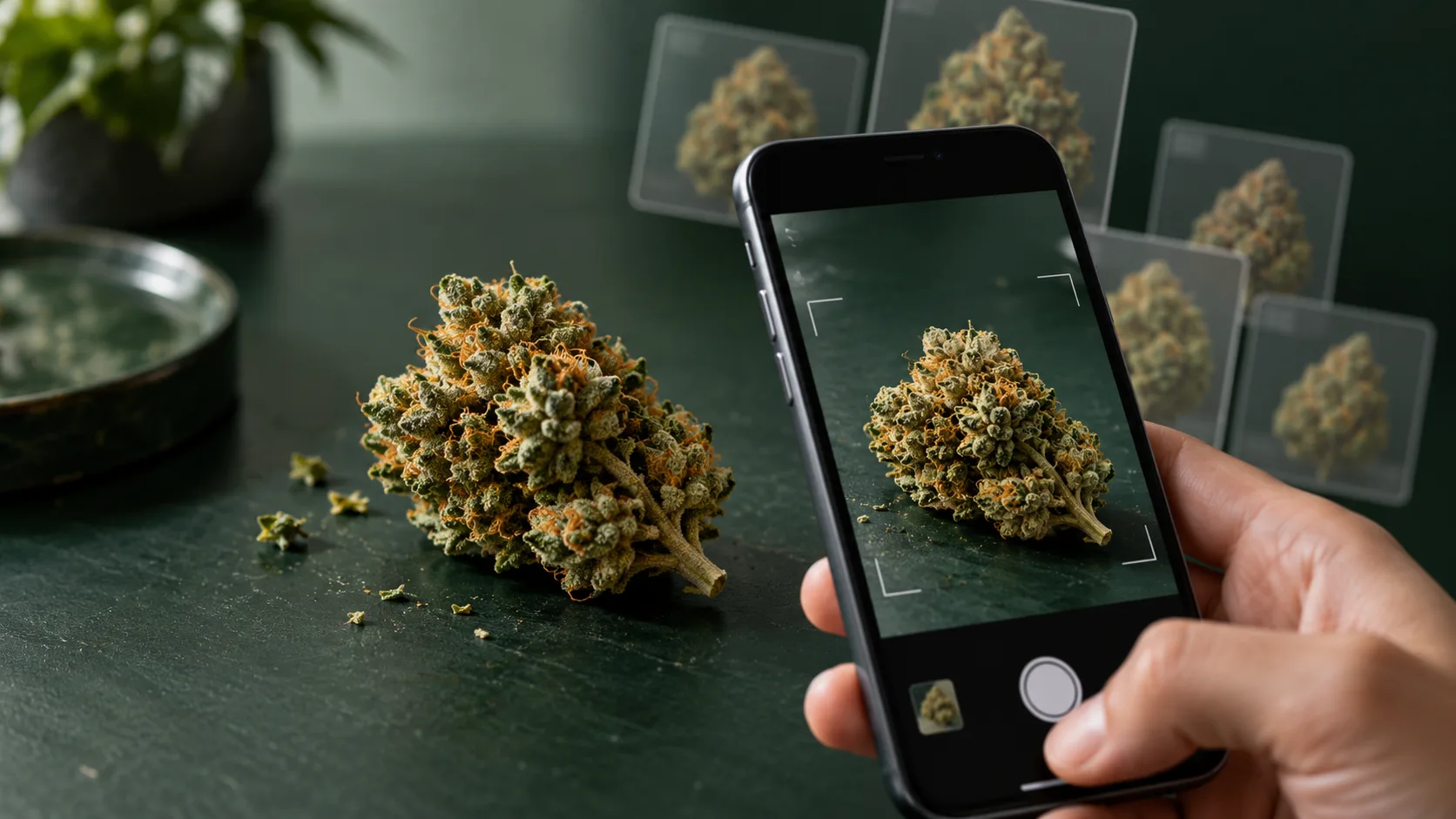
- Use the best single frame. Take several candidate pictures if necessary, then submit the sharpest neutral photo.
- Look beyond the top name. Compare the visible features and alternative matches rather than treating rank one as a verdict.
- Check the source history. Packaging, producer, batch, and purchase records can add provenance.
- Use lab data for chemistry. The label and matching COA should carry more weight for measured compounds and safety screens.
Try visual identification with realistic expectations
KushScan compares one clear dry-flower photo with its supported strain catalog and returns likely visual matches. Treat the result as useful context, then verify important details with records and testing.
Download KushScanThe takeaway
Weed strain identifier apps are most accurate when the flower belongs to a well-represented supported class and the input photo is clear. Even then, the result is a visual classification—not genetic authentication or a laboratory certificate. Use the app to narrow, compare, and learn; use provenance and lab testing when certainty matters.
Sources
- Scientific Reports: Genetic tools weed out misconceptions of strain reliability in Cannabis sativa, research on strain-label reliability and same-name outliers.
- Cannabis Chemovar Nomenclature Misrepresents Chemical and Genetic Diversity, peer-reviewed research on limits of strain names.
- NIST: Cannabis Laboratory Quality Assurance Program, context on accurate cannabis laboratory measurements.
- New York Office of Cannabis Management: How to Read a Certificate of Analysis, regulator guidance on batch-level COA verification.