Searches like “purple weed,” “orange hairs on weed,” and “what does brown weed mean” all come from the same practical question: can the way cannabis looks tell you what it is? Sometimes it can help. Color can point toward genetics, plant pigments, pistil maturity, trichome coverage, drying, curing, storage, and photo quality.
The trick is not to turn a visual clue into a certainty. A useful weed color guide should help you notice what matters, ignore the myths, and know when to verify with a Certificate of Analysis instead of a camera.
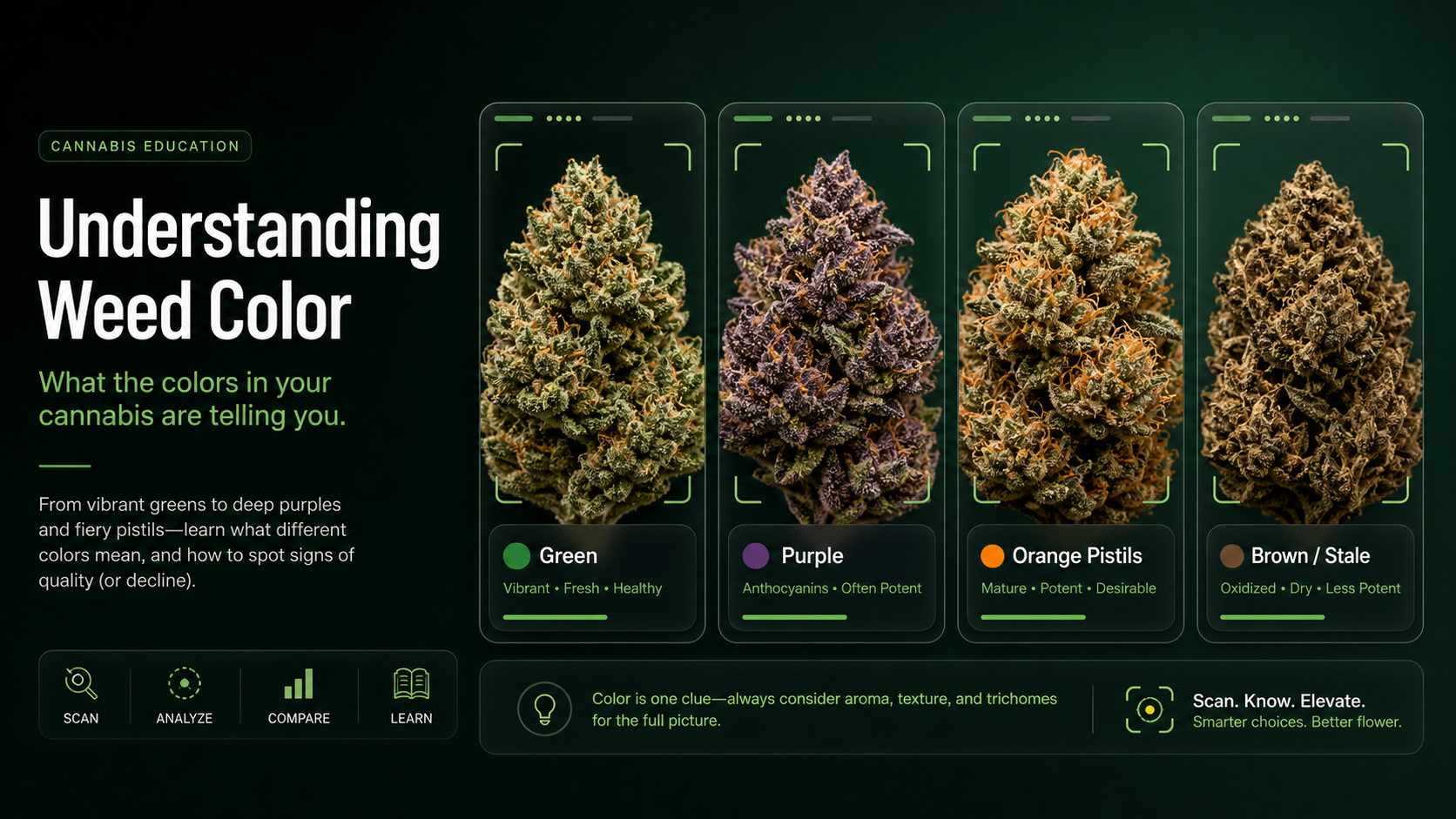
Weed color guide: the quick version
Dry cannabis flower is usually a mix of signals rather than one pure color. Here is the consumer-friendly read:
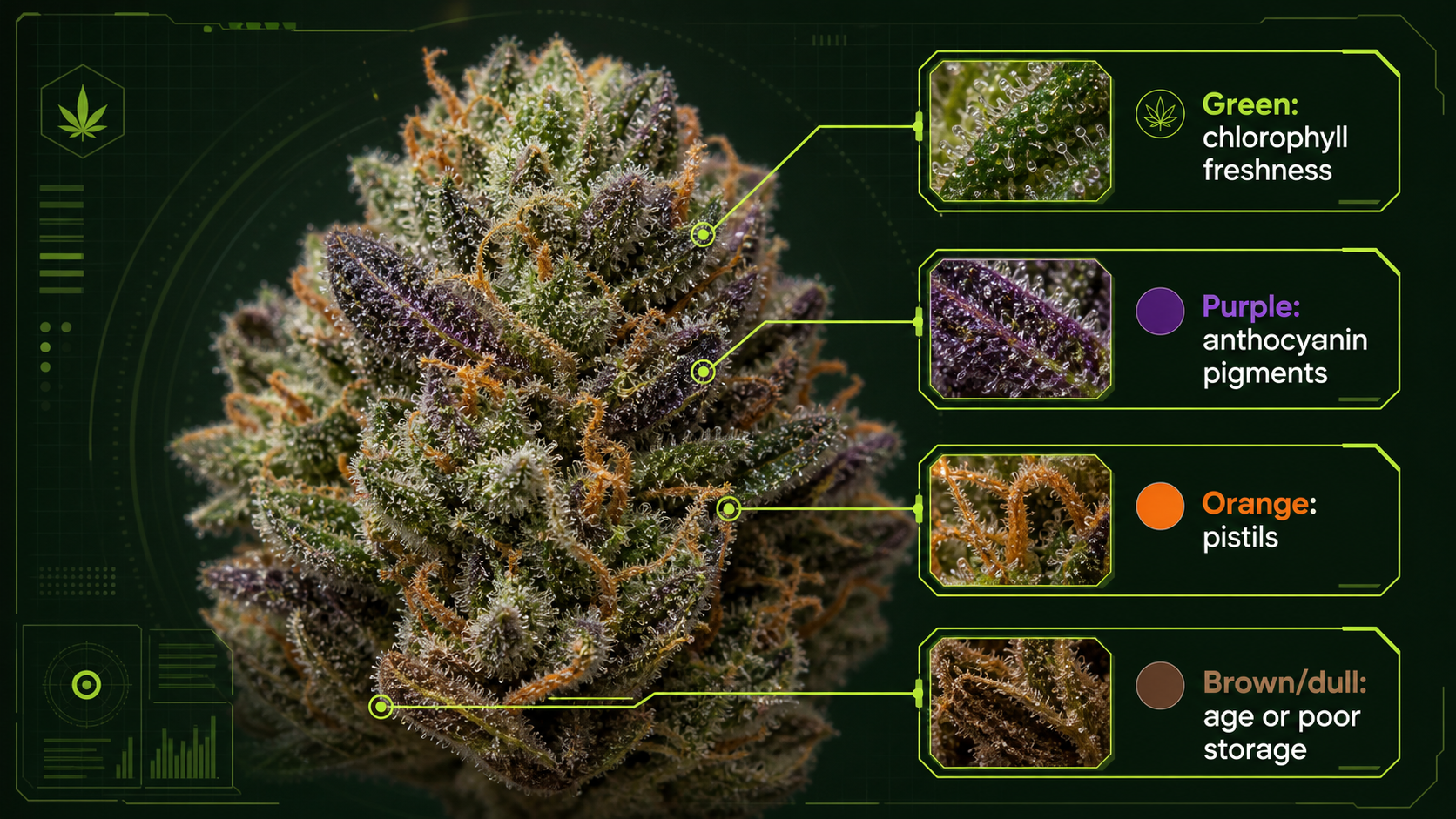
- Green: the baseline color of most cannabis flower, mostly linked to chlorophyll and normal plant tissue.
- Purple, red, or blue tones: often linked to anthocyanin pigments and genetics, sometimes encouraged by cooler conditions during growth.
- Orange or reddish hairs: usually pistils, the flower’s reproductive structures, which commonly darken as the plant matures and dries.
- White or silvery frost: visible trichomes and resin coverage, not literal mold unless the texture looks fuzzy, webby, or suspicious.
- Brown, tan, or gray dullness: can suggest age, oxidation, dryness, poor storage, rough handling, or contamination risk depending on texture and smell.
Those are starting points. They work best when combined with bud structure, trichomes, aroma, packaging date, batch label, and COA. For a broader photo-identification framework, read how to identify a weed strain by picture.
Green weed: normal does not mean boring
Most cannabis flower stays somewhere in the green family because chlorophyll is the dominant plant pigment. Healthy-looking green flower can range from pale lime to deep forest green. That range can be shaped by genetics, nutrient levels, grow light, harvest timing, drying, and curing.
Green color by itself does not prove freshness or potency. A vivid green bud may be excellent, average, under-cured, or simply photographed under flattering light. A darker green bud may be dense and resinous, or it may be leafy and harsh. Look for the full picture: intact trichomes, balanced moisture, clean trim, pleasant aroma, and a trustworthy batch source.
Purple weed: beautiful, but not automatically stronger
Purple cannabis is often popular because it looks dramatic. The color is usually associated with anthocyanins, a family of plant pigments responsible for red, purple, and blue tones in many plants. Recent cannabis research has looked at the genes and pathways behind anthocyanin accumulation in Cannabis sativa.
What matters for consumers: purple is mostly a pigment and genetics clue, not a potency guarantee. A purple strain can be strong or mild. A green strain can be strong or mild. The chemical profile depends on cannabinoids, terpenes, maturity, handling, and testing — not just the shade of the flower.
Cold nights during flowering can make purple tones more visible in some cultivars, but cold alone does not magically improve weed. If a product claims high THC or a specific terpene profile, the proof should be the COA, not the color.
Orange hairs on weed: what pistils actually mean
The orange, red, or rusty hairs on many buds are usually pistils. On living cannabis flowers, pistils help catch pollen. As the plant matures and the flower dries, many pistils darken, curl, and become more visible against the green or purple bud.
Orange pistils can make flower look mature and appealing, but they are not a lab test. Pistil color does not calculate THC percentage, identify a strain, or prove perfect harvest timing. It is also easy for photos to exaggerate orange tones through warmth, flash, saturation, or indoor lighting.
For photo scanning, pistils are useful because they add texture and pattern. They are one of several visible features a human or visual tool can compare, alongside bud structure and trichome coverage. They should not be treated as the whole answer.
White, frosty, or silver weed: trichomes versus mold
White sparkle is often a good sign when it comes from glandular trichomes — the tiny resin structures associated with cannabinoids and terpenes. Scientific reviews describe stalked glandular trichomes on female cannabis flowers as key sites where cannabinoids and terpenes are produced and stored.
But “white” needs context. Healthy trichome frost usually looks crystalline, sparkly, or sandy on the flower surface. Mold or mildew can look fuzzy, powdery, web-like, gray-white, or uneven in a way that seems to sit on top of the bud rather than sparkle from resin heads. If flower smells musty, looks fuzzy, or seems contaminated, do not rely on an app photo to clear it as safe.
For a deeper visual breakdown, see cannabis trichomes explained.
Brown weed: age clue, storage clue, or warning sign?
Brown is the most context-dependent color. Small amber or brown pistils can be normal. Slightly darker tones can happen with curing and age. But flower that is mostly brown, brittle, flat, dusty, gray, or lifeless may be old, over-dried, oxidized, badly stored, or otherwise low quality.
Brown weed is not always unsafe, and green weed is not always safe. Still, dull brown color plus musty smell, visible fuzz, dampness, or strange residue is a reason to be cautious. Cannabis products can also carry labeling, contamination, manufacturing, and quality concerns that visual inspection cannot fully solve — one reason FDA and public-health sources keep emphasizing evidence, testing, and caution around cannabis-derived products.
Can weed color identify a strain?
Color can help narrow visual comparisons, but it cannot confirm a strain name. Many unrelated strains can produce purple tones. Many classic strains appear mostly green with orange pistils. The same named strain can look different across growers, phenotypes, harvest windows, curing styles, storage conditions, and camera settings.
This is why KushScan treats a flower photo as a visual input, not a final certificate. A good scan can compare visible traits: color distribution, bud structure, resin coverage, pistils, density, trim, and surface texture. But the result should be checked against packaging, batch data, and COA when those are available. If strain names themselves feel inconsistent, our guide to why cannabis strain names are confusing explains why.
How to photograph cannabis color more accurately
If you want useful color clues, make the photo boring on purpose:
- Use neutral light. Window light or a soft white lamp beats purple grow lights, neon LEDs, and harsh flash.
- Skip filters. Saturation boosts can turn normal green flower into fake-looking emerald or make purple tones misleading.
- Use a plain background. A white, gray, or dark neutral surface helps the camera avoid weird color shifts.
- Show the whole dry bud. Extreme macro shots hide structure; jar shots and piles make identification harder.
- Take one sharp frame. Blurry color blobs are not useful for humans or scanners.
That simple setup also helps with weed scanner apps, because the image contains more honest visual information and fewer lighting tricks.
Use color as a clue, not a verdict
KushScan can help analyze dry cannabis flower photos for visual strain-style clues, likely matches, and THC/context estimates. For important decisions, pair visual scanning with labels, COAs, trusted retailers, and cautious personal judgment.
Download KushScanThe takeaway
Weed color can be useful: green shows normal plant tissue, purple often points to anthocyanin pigments, orange hairs are usually pistils, white frost can show resin, and brown dullness can flag age or storage concerns. But cannabis is chemically complex. Color is a clue for identification and quality checks — not proof of strain, potency, safety, or effects.
Sources
- PubMed: genetic basis of anthocyanin accumulation in Cannabis sativa, research context on cannabis purple/red pigment pathways.
- Cannabis Glandular Trichomes: A Cellular Metabolite Factory, peer-reviewed review of trichomes as cannabinoid and terpene production/storage sites.
- NCCIH: Cannabis, Marijuana, and Cannabinoids — What You Need To Know, NIH overview of cannabis chemistry and cannabinoids.
- NIDA: Cannabis / Marijuana, public-health context on cannabis products and THC potency.
- FDA: Cannabis and Cannabis-Derived Products, Including CBD, safety, labeling, quality, and unproven-claim context.