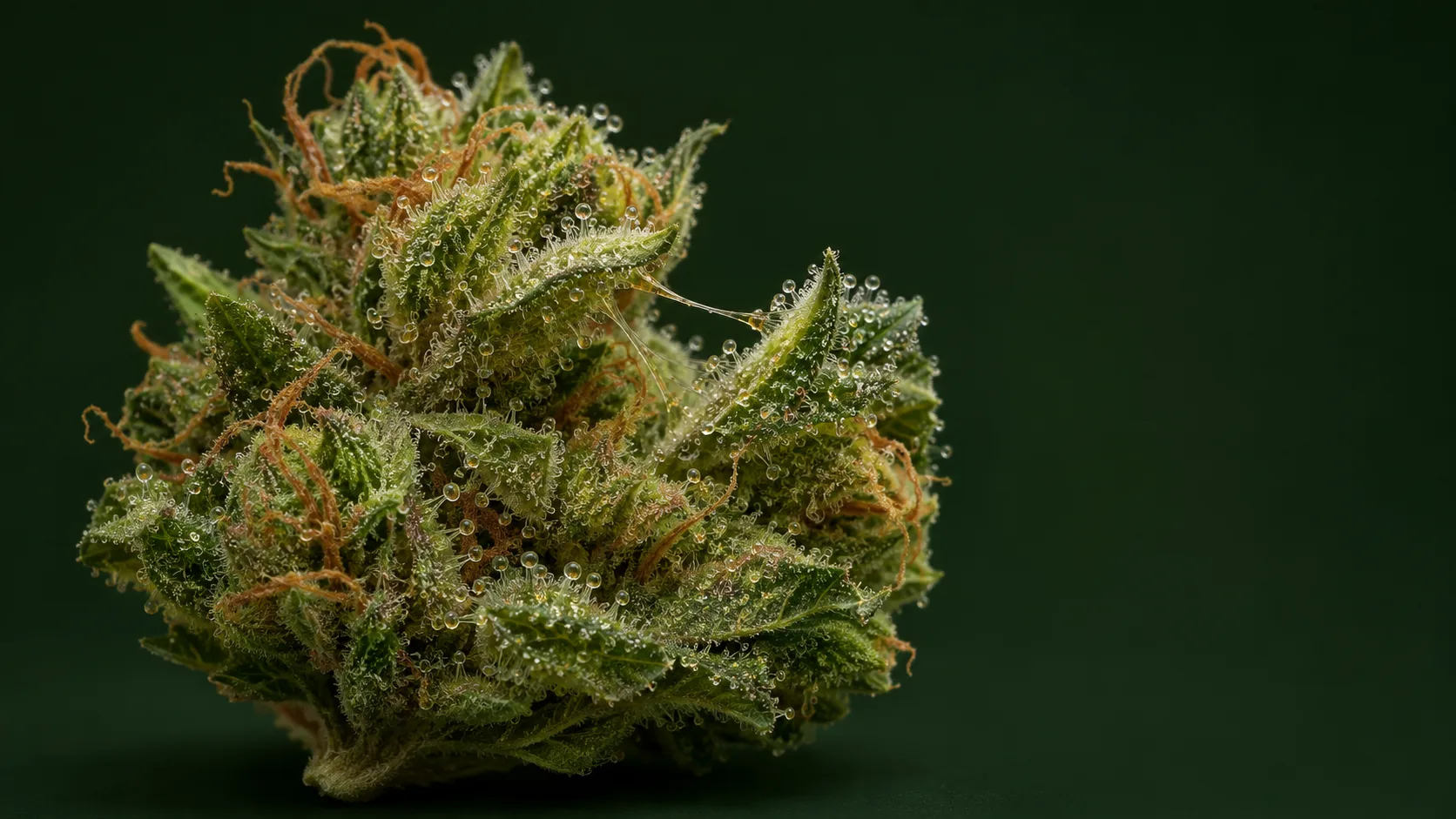
Texture is one of the first clues people notice after opening a container of cannabis flower. One bud feels dry and crumbly; another feels springy; a third leaves a faint tack on the fingertips. It is tempting to turn those differences into a simple quality score: stickier must mean stronger and therefore better.
Real flower is more complicated. Resin can contribute to a desirable tacky feel, but damp plant material can also feel soft or sticky. A properly cured flower may be resinous without feeling wet, and a potent flower can lose surface tackiness through age or rough handling. The best assessment combines touch with appearance, aroma, packaging information, and batch-specific laboratory results.
What does sticky weed mean in 60 seconds?
- Resin is the usual explanation. Female cannabis flowers carry glandular trichomes that produce and store resin containing cannabinoids, terpenes, and other compounds.
- Sticky is not the same as wet. Resinous flower feels tacky; excessively moist flower may feel damp, spongy, or difficult to break apart.
- Stickiness is not a potency test. Touch cannot measure THC, THCA, CBD, or any other cannabinoid.
- Handling changes the clue. Heat, pressure, trimming, grinding, and repeated contact can rupture trichome heads and smear or remove resin.
- Storage matters. Light, heat, oxygen, humidity, and time can change aroma, texture, and chemical composition.
- Safety comes first. Fuzzy growth, musty or basement-like odors, unexplained white or gray patches, or persistently damp interiors are reasons not to use suspicious flower.
Why cannabis flower feels sticky
The surface of a cannabis flower is covered with tiny hair-like structures called trichomes. Several trichome types occur on the plant, but capitate-stalked glandular trichomes are especially important on mature female flowers. Their rounded heads contain a secretory cavity where resinous metabolites accumulate.
That resin includes cannabinoid acids such as THCA, CBDA, and CBGA, along with volatile aromatic compounds. When intact trichomes are pressed, warmed, or broken, resin can transfer to skin, scissors, a grinder, or nearby flower surfaces. The result is the familiar tacky feeling.
“Resinous” does not require a bud to leave glue-like strands. Trichome heads are microscopic, and their condition varies. Some flowers feel only slightly tacky until broken open. Others have already lost surface resin to packaging or handling. Temperature also matters: warmth can soften resin and make the same flower feel stickier than it does in a cool room.
Sticky weed vs wet weed: how to tell the difference
Resin and water create different kinds of texture, although the distinction is not always obvious by touch alone.
- Resinous tack: a light grip or drag on the fingertips, often strongest where the flower is broken; visible trichomes may remain distinct under magnification.
- Excess moisture: a damp, cool, or spongy feel; stems and inner flower may bend instead of snapping; material may compress into a dense mass and resist an even grind.
- Very dry flower: brittle edges, rapid crumbling, and trichomes that detach easily as dust or kief.
Water activity is more useful than casual touch for discussing whether water is available to support microbial growth. It is not identical to total moisture content. NIST materials discussing dry cannabis flower cite an ASTM target water-activity range of 0.55 to 0.65 for maintaining product quality while limiting conditions favorable to microorganisms. Consumers cannot determine a precise water-activity value by squeezing a bud.
If flower seems unusually wet, sealing it in a jar and hoping for the best can trap moisture. Commercial producers use controlled drying, curing, packaging, and testing procedures. At home, do not try to “fix” flower that shows possible mold or carries a musty odor—discard suspicious material rather than inhaling it.
Does sticky weed mean high THC?
No. Stickiness does not reveal an exact THC percentage. Glandular trichomes are where the plant produces and stores cannabinoids, so abundant, intact resin is biologically relevant. But the relationship between visible trichome abundance and total cannabinoid concentration is not simple enough to turn touch or a macro photo into a potency reading.
Trichomes differ by type, maturity, size, location, genetics, and chemical profile. One flower may carry resin dominated by THCA, another by CBDA, and another by a different mixture. A trichome-rich surface can also be photographed in a way that exaggerates “frost,” while older or machine-handled flower may lose visible heads without starting from low potency.
Only a suitable batch-specific laboratory analysis can quantify cannabinoids. Read the product label and Certificate of Analysis when one is available. Even then, the reported number describes the tested sample and does not predict exactly how an individual will respond.
Does sticky weed mean it is fresh?
Stickiness can be compatible with well-preserved flower, but it is not a freshness date. Freshly packaged flower may retain aromatic compounds and supple texture, yet an overly moist batch can also feel soft. Meanwhile, properly stored older flower may still feel resinous, and a new batch can arrive dry after poor packaging or transport.
Use several clues together:
- Check the package and harvest dates. They provide context that touch cannot.
- Look at trichome condition. Intact heads suggest gentler handling; large bare patches and abundant loose dust can suggest abrasion.
- Smell cautiously. A recognizable cannabis aroma is different from musty, mildew-like, ammonia-like, or basement odors.
- Inspect the interior. Break open one flower under bright neutral light and look for unusual webbing, fuzz, gray-brown decay, or powdery patches.
- Consider storage. A cool, dark, airtight environment generally protects flower better than heat, direct light, or repeated exposure to open air. See our guide to storing cannabis flower.
Can a sticky texture identify a weed strain?
No single texture identifies a cultivar. Many unrelated cannabis plants produce resinous flower, and batches carrying the same strain name can differ because of genotype, phenotype, cultivation, harvest timing, drying, curing, storage, and handling.
Stickiness is also difficult to capture in a standard photograph. A macro image may show intact or ruptured trichomes, compressed surfaces, and loose resin, but it cannot show exactly how the sample feels. A glossy patch might be resin, moisture, lighting, or image processing.
A bud identifier can compare structure, color, stigmas, trim, and visible trichomes. It should not convert those observations into genetic authentication or a chemical measurement. The most defensible description is specific and limited: “This flower appears trichome-rich and may be resinous,” not “This sticky bud proves a particular strain and potency.”
What stickiness can—and cannot—tell you
Stickiness may suggest:
- resin is present on the flower surface;
- some trichome heads have ruptured or transferred resin;
- the sample has retained enough moisture to avoid becoming completely brittle;
- temperature or pressure has softened and spread surface resin.
Stickiness cannot prove:
- THC percentage, total cannabinoid content, or terpene concentration;
- strain name, genetic lineage, indica or sativa identity;
- freedom from mold, pesticides, microbes, or other contaminants;
- proper curing, freshness, or a specific harvest date;
- the effects, quality, or safety a person will experience.
How to inspect sticky flower without damaging it
- Start with clean, dry hands. Oils, lotion, and water can change the texture and contaminate the comparison.
- Use bright neutral light. Avoid colored LEDs and harsh flash when checking trichome condition.
- Handle one flower gently. Repeated squeezing breaks trichomes and makes later observations less reliable.
- Photograph before grinding. Capture the overall structure, then one close view of the surface and one of the broken interior.
- Keep safety separate from identification. If you see suspicious fuzz, webbing, decay, or damp pockets, stop; an app or photo cannot clear flower as safe.
For a scan, place one intact dry flower against a plain background and keep the camera steady. A sharp image preserves structure and visible surface details better than a hand-held photo taken under warm household lighting.
Where KushScan fits
KushScan can help organize the visual part of flower identification: shape, color distribution, stigma patterns, trim, and visible trichome coverage. It can compare a clear photo with supported reference examples and return a likely visual match.
It cannot feel tackiness, measure water activity, quantify cannabinoids, verify genetics, or test for contaminants. Treat the scan as one piece of evidence alongside packaging, provenance, aroma, condition, and laboratory results.
Compare visible flower clues with KushScan
Take a sharp photo before handling or grinding the flower. Use the result to guide visual comparison—not as a potency, moisture, safety, or genetic test.
Download KushScanThe takeaway
Sticky cannabis usually points to surface resin, especially when a flower feels lightly tacky rather than damp. That observation can tell you something about trichomes, handling, and texture, but not how strong, fresh, safe, or genetically authentic the flower is. Separate resin from excess moisture, inspect condition before identity, and rely on batch records and laboratory testing for claims that fingers and photos cannot support.
Sources
- Frontiers in Plant Science: Cannabis Glandular Trichomes—A Cellular Metabolite Factory, a peer-reviewed review of trichome structure and the production and storage of cannabinoid- and terpene-rich resin.
- Frontiers in Plant Science: Glandular trichome development, morphology, and maturation in cannabis inflorescences, used for trichome variation and the limits of assuming a direct relationship between trichome density and total cannabinoids.
- NIST: 2023 Summary of U.S. Legal Metrology Activities, used for the distinction between moisture and water activity and the cited ASTM water-activity range for dry cannabis flower.
- Frontiers in Microbiology: Fungal and mycotoxin contaminants in cannabis and hemp flowers, a peer-reviewed review of drying, storage, water activity, fungi, and consumer-health concerns.
- NIH NCCIH: Cannabis, Marijuana, and Cannabinoids—What You Need To Know, federal health context for cautious claims about cannabis products and effects.