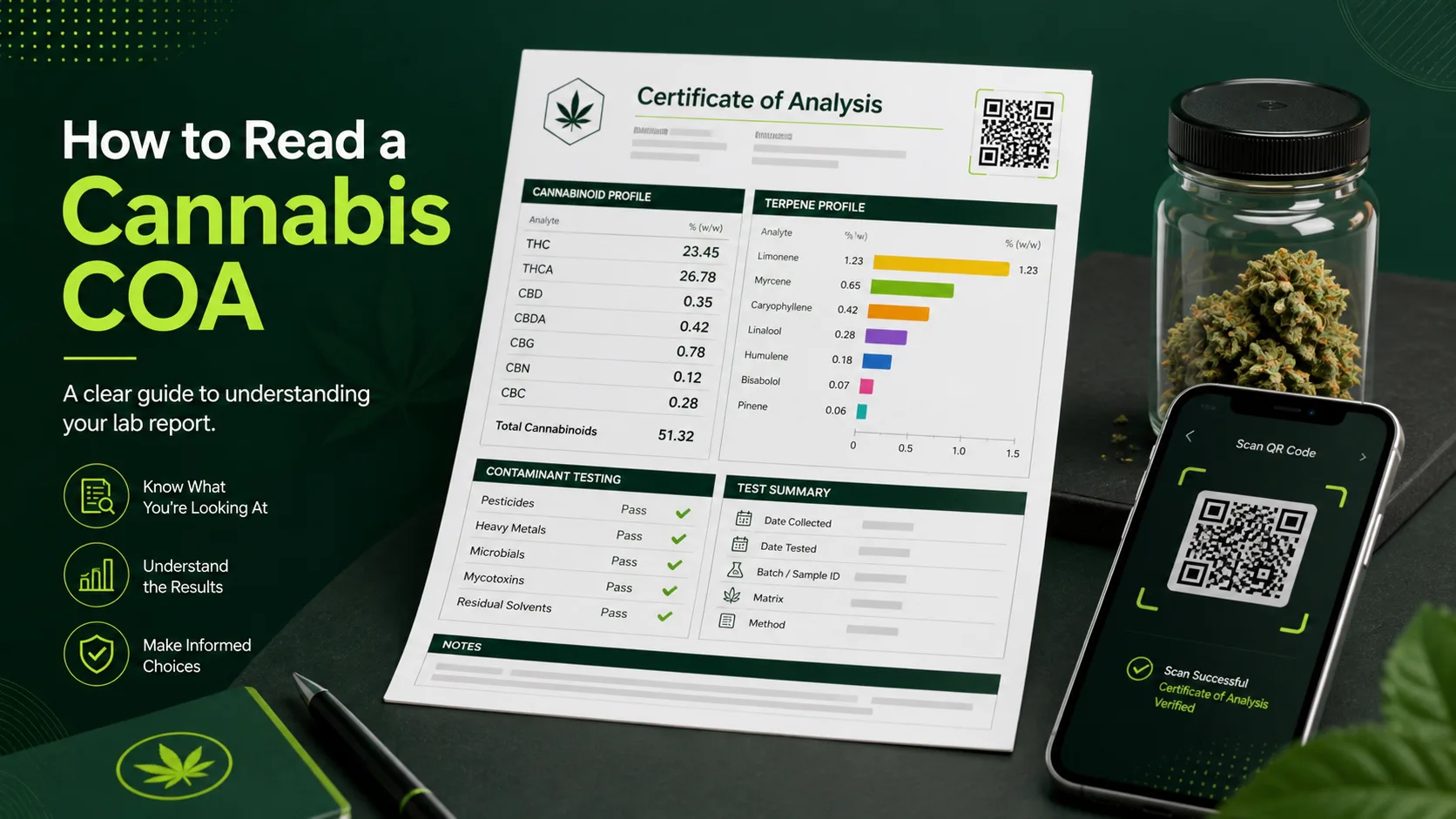
If strain names are the front label, the COA is the receipt. It does not make cannabis perfectly predictable, and it does not tell you exactly how a product will feel. But it can answer questions a photo, budtender description, or catchy strain name cannot answer: what was measured, what was tested, which batch the result belongs to, and whether the lab recorded pass or fail results for safety screens.
Learning how to read the report is especially useful if you use visual tools like KushScan. A clean flower photo can help compare visible traits such as bud structure, color, trichomes, pistils, trim, and likely strain-style clues. A COA handles the lab side: cannabinoids, terpenes, contaminants, and batch verification.
What is a COA?
A cannabis COA is a Certificate of Analysis issued by a testing laboratory. In regulated markets, labs test cannabis products and report results for the batch they received. California’s Department of Cannabis Control explains that labs report results on COAs and that COAs say whether a batch passes or fails testing for each required substance.
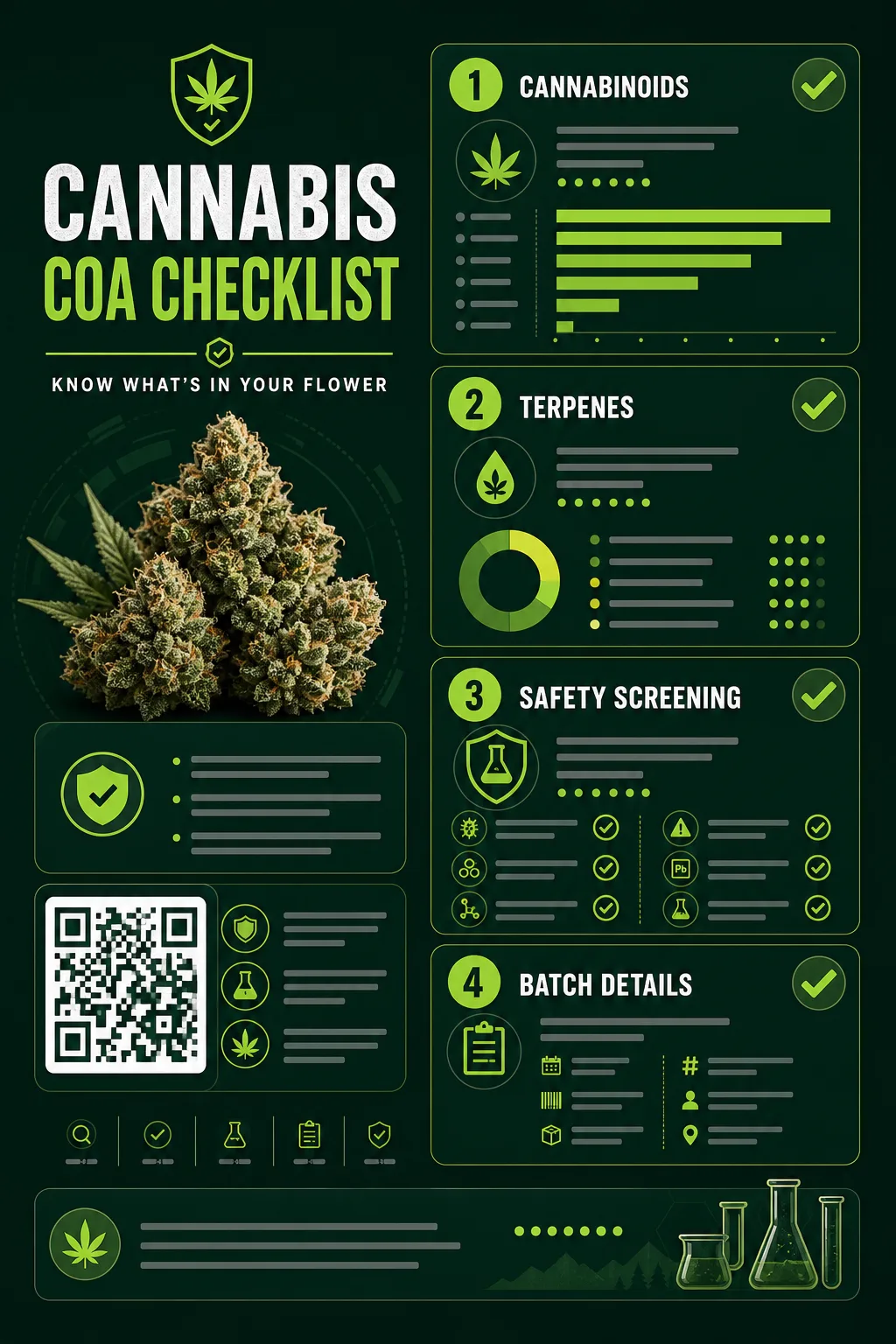
The exact layout changes by lab and state, but most COAs include the same core sections:
- Product and batch details: product name, batch or lot number, sample date, test date, manufacturer or licensee, and sometimes a QR code.
- Cannabinoid potency: measured THCA, THC, CBDA, CBD, CBG, CBN, total THC, total CBD, and related compounds.
- Terpene profile: measured aroma compounds such as myrcene, limonene, beta-caryophyllene, pinene, linalool, and others when terpene testing is included.
- Safety screening: pass/fail or numeric results for contaminants such as pesticides, heavy metals, microbial impurities, mycotoxins, residual solvents, moisture, water activity, and foreign material depending on product type and local rules.
- Lab information: testing lab name, accreditation or license details, signatures, methods, and reporting limits.
How to read a cannabis COA without getting lost
Start with the boring details first. Before you compare percentages, confirm that the COA actually belongs to the product in your hand. Match the product name, batch number, lot number, package date, and QR code if one is available. If those details do not line up, treat the report as questionable.
Then check the big pass/fail results. For consumers, a “passed” safety screen is often more important than chasing the highest THC number. Look for sections covering pesticides, microbial impurities, heavy metals, residual solvents, mycotoxins, moisture content, water activity, and foreign material. A result may say “pass,” “ND” for not detected, or show a numeric amount below a reporting threshold.
Only after that should you read potency and terpene numbers. Potency tells you the measured cannabinoid profile for that batch. Terpenes give aroma-context clues. Neither section guarantees personal effects, but both are more reliable than judging strength from frost, smell, or strain name alone.
Cannabinoids: THC, THCA, CBD, and totals
The cannabinoid table is the section most people open first. For flower, you will often see acidic cannabinoids such as THCA and CBDA alongside neutral cannabinoids such as THC and CBD. THCA is the non-intoxicating acidic precursor that can convert into THC with heat, time, or processing. That is why many labels also show “total THC,” usually calculated from THCA plus existing THC using a conversion factor.
Do not assume every COA uses the exact same display style. Some show percentages, some show milligrams per gram, and some show both. If you are comparing products, make sure you are comparing the same unit. A flower COA with 24% total THC is not formatted the same way as an edible COA showing milligrams per serving.
Also remember that cannabinoids are not the whole experience. A high-THC product can feel flat to one person and too intense to another. A moderate-THC product with a terpene profile someone enjoys may be preferable. For a deeper chemistry primer, read our guide to THCA vs THC and our plain-English guide to CBD vs THC.
Terpenes: useful aroma clues, not effect guarantees
Terpene results can make a COA much more interesting. Terpenes are aromatic compounds that contribute to cannabis smell and flavor. A report may list myrcene, limonene, beta-caryophyllene, pinene, linalool, humulene, terpinolene, ocimene, and others, usually as percentages or milligrams per gram.
Use terpene data as aroma context rather than a promise. Limonene-heavy batches may smell citrusy. Pinene can suggest pine notes. Beta-caryophyllene can lean peppery or spicy. But personal effects depend on dose, tolerance, product type, setting, cannabinoids, and individual response — not a single terpene line on a lab report.
The best use is comparison. If two jars have the same strain name but very different terpene profiles, they may smell and feel meaningfully different. If a product claims a loud gas, citrus, fruit, or dessert profile, the terpene section can help you see whether the lab result supports that story. Our terpenes in weed guide explains the aroma science in more detail.
Safety testing: the section beginners should not skip
Potency gets attention, but safety screening is the reason COAs matter. California’s cannabis regulator lists required testing categories that include cannabinoids and terpenes, residual solvents and processing chemicals, residual pesticides, heavy metals, microbial impurities, mycotoxins, moisture content and water activity, and foreign material.
Those categories exist because cannabis is an agricultural product that can be grown, dried, extracted, packaged, stored, and transported in many ways. Flower can be too moist. Concentrates can involve solvents. Plant material can be exposed to contaminants. A proper lab report helps document what was checked for that batch.
Look for results that are clearly marked. If a safety category is missing, ask why. Some categories vary by product type and jurisdiction, but a serious regulated-market COA should not feel like a mystery worksheet. If the only information available is a marketing label with a big THC number, you are missing important context.
Batch details: where COAs catch label confusion
Strain names are messy. The same name can cover different phenotypes, different growers, different harvests, and different chemical profiles. That is why batch details matter. A COA should connect a result to a specific lot, not just to a famous strain name.
When you compare a COA to the package, check:
- Batch or lot number: it should match the package or QR-linked record.
- Product form: flower, pre-roll, vape, concentrate, edible, tincture, or another type.
- Dates: sample received, test completed, harvest, manufacture, package, or expiration date when shown.
- Lab identity: the lab should be named, traceable, and appropriate for the market.
- Amended reports: if a COA was revised, the report should make that clear.
This is where visual identification and lab reporting work together. A photo can help you ask, “Does this flower look like the label’s strain family?” The COA helps you ask, “Does this exact batch have the measured chemistry and pass/fail status claimed?”
What a COA cannot tell you
A COA is evidence, not a crystal ball. It cannot tell you exactly how a product will affect you, whether you will enjoy it, whether the strain name is historically “authentic,” or whether the product is legal for you to buy where you live. It also cannot fix bad storage after testing. Heat, light, oxygen, rough handling, and time can change flower quality after the lab report was issued.
COAs also depend on sampling and lab quality. NIST notes that cannabis measurements support legal, commerce, and safety claims, and its cannabis laboratory quality program focuses on improving measurement comparability across labs. In plain English: accurate testing matters, and not every number should be treated as perfect just because it is printed on a polished PDF.
If a lab result looks too good to be true, has missing batch information, lacks safety categories, or does not match the package, slow down. The smartest cannabis consumers are not the ones who memorize every terpene. They are the ones who know when the evidence is strong and when it is thin.
How COAs help weed identification
COAs are not strain identifiers by themselves, but they make strain identification more grounded. A product called Blue Dream, Sour Diesel, OG Kush, or Gelato should not be judged by the name alone. Visible flower traits, aroma clues, terpene profile, cannabinoid profile, grower reputation, and batch records all matter.
That is why KushScan-style photo analysis works best as one layer. Use a clear dry flower photo to compare visual cues. Use the label and COA to verify batch-level claims. If the photo, name, terpene profile, and cannabinoid profile all point in the same direction, confidence goes up. If they conflict, the conflict itself is useful information.
For visual context, pair this article with our guides on how to identify a weed strain by picture, cannabis trichomes, and bud structure and cannabis quality.
Scan photos, then verify the batch
KushScan can help analyze dry cannabis flower photos for visual strain-style clues, likely matches, sativa/indica context, and estimated THC context. For important claims, compare the scan with the product label, batch number, and COA.
Download KushScanThe takeaway
A cannabis COA is the lab-report layer of cannabis literacy. Read it in this order: match the batch, check pass/fail safety results, understand cannabinoid units, use terpenes as aroma context, and remember what the report cannot prove. A good COA will not tell you everything, but it gives you better evidence than strain names, photos, or marketing copy alone.
Sources
- California Department of Cannabis Control: Testing laboratories, required testing categories, COA reporting, pass/fail context, and lab reliability requirements.
- NIST: Tools for Cannabis Laboratory Quality Assurance, cannabis measurement quality, reference materials, and CannaQAP context.
- NCCIH: Cannabis, Marijuana, and Cannabinoids — What You Need To Know, NIH overview of cannabis, cannabinoids, and product complexity.
- FDA: Regulation of Cannabis and Cannabis-Derived Products, federal consumer and regulatory context around cannabis-derived products.