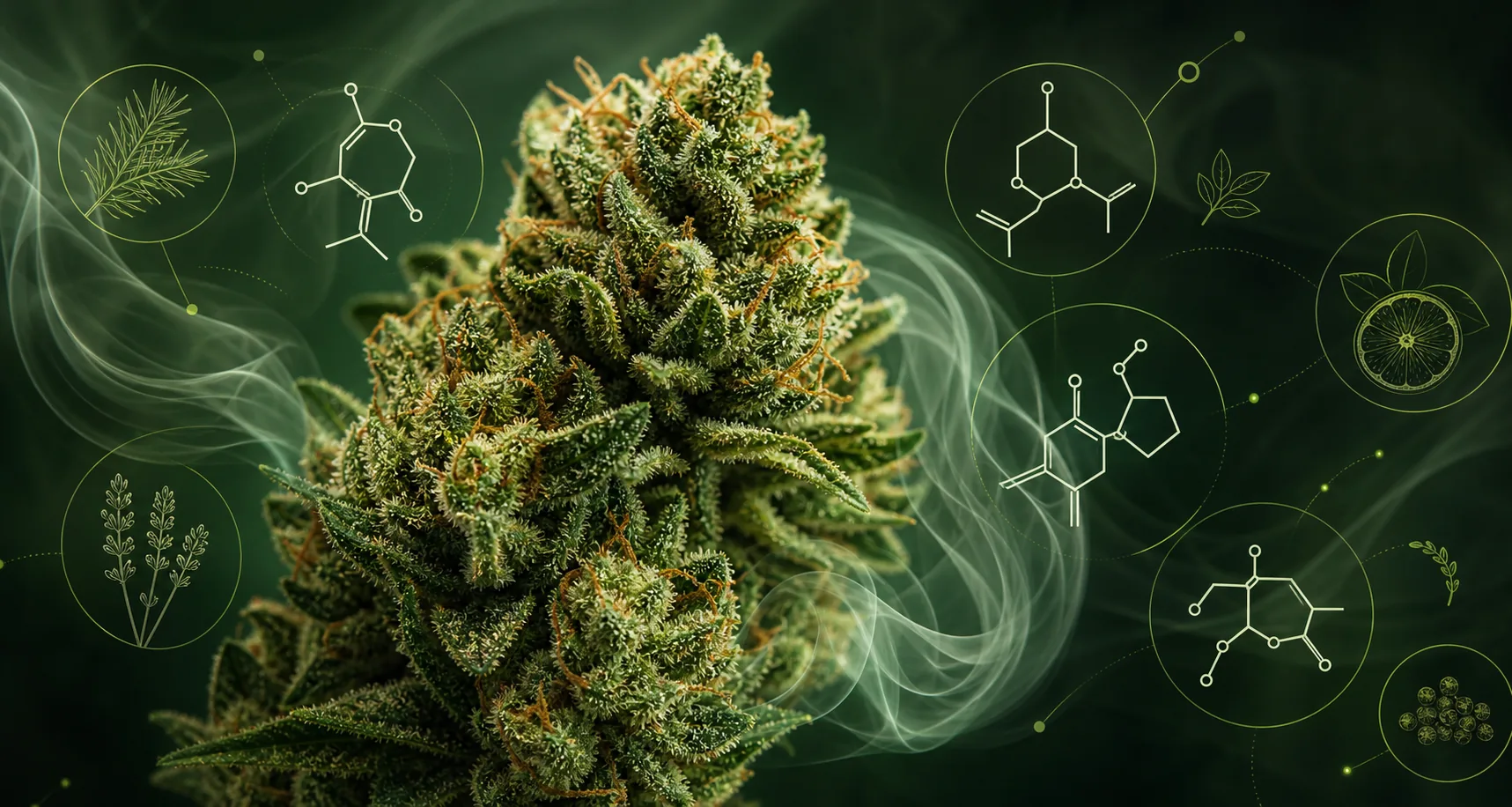
If THC percentage is the headline on many cannabis labels, terpenes are the part that makes the flower memorable. Open a jar of Sour Diesel, Blue Dream, Gelato, or OG Kush and the first thing you notice is not a lab number. It is aroma: sharp, sweet, earthy, gassy, floral, spicy, or skunky. Terpenes are a major reason that happens.
This guide keeps the hype in check. Terpenes matter for smell, flavor, freshness, and consumer preference. They may also interact with cannabinoids in ways researchers are still studying. But they do not let you predict medical effects from a sniff, and they cannot replace a certificate of analysis, careful dosing, or common sense.
What are terpenes in weed?
Terpenes are volatile aromatic compounds made by many plants, including Cannabis sativa. They help create the smell of lavender, citrus rinds, pine needles, hops, rosemary, black pepper, and cannabis flower. In cannabis, terpenes are concentrated in the same resin-rich areas people associate with trichomes and cannabinoids.
Researchers and cannabis labs often discuss terpenes as part of a plant’s chemical profile, sometimes called a chemovar. That chemical profile can include cannabinoids such as THC, THCA, CBD, and CBG, plus aromatic compounds such as myrcene, limonene, pinene, linalool, humulene, terpinolene, and beta-caryophyllene.
In plain English: cannabinoids help define much of the intoxication and pharmacology. Terpenes help define the smell, taste, and possibly some of the nuance around the experience — but the exact human effects are not as proven as many dispensary menus make them sound.
Common cannabis terpenes and what they smell like
Different sources list different dominant terpenes depending on the sample, cultivar, harvest, drying, curing, storage, and lab method. Still, these names show up often on cannabis labels:
- Myrcene: earthy, musky, herbal, sometimes fruity; also found in hops and mango.
- Limonene: citrus peel, lemon, orange, bright fruit notes.
- Alpha-pinene and beta-pinene: pine, resin, rosemary-like freshness.
- Beta-caryophyllene: peppery, spicy, woody; also found in black pepper and cloves.
- Linalool: floral, lavender-like, soft and perfumed.
- Humulene: earthy, woody, hoppy, herbal.
- Terpinolene: herbal, floral, citrusy, sometimes tea-tree-like.
These are aroma clues, not guarantees. A “limonene-heavy” label does not automatically mean a product will feel uplifting for every person. Dose, THC level, CBD content, route of use, tolerance, setting, and individual biology still matter.
Do terpenes really change cannabis effects?
The honest answer is: maybe, but the simple charts are ahead of the evidence.
You will often hear about the entourage effect, the idea that cannabinoids, terpenes, and other cannabis compounds may work together rather than acting as isolated chemicals. It is a plausible and actively studied idea. The National Center for Complementary and Integrative Health notes that cannabis contains hundreds of chemical substances and that more than 100 cannabinoids have been identified. NCCIH also supports research into minor cannabinoids and terpenes, especially around pain mechanisms.
But consumer-facing terpene claims often jump too far. “Myrcene means couch-lock,” “limonene means happy,” or “pinene prevents memory issues” are too neat. Much of the evidence comes from laboratory, animal, observational, or early-stage research rather than large, product-specific clinical trials in real-world consumers.
A better way to think about terpenes: they can help you describe and compare cannabis products. They may contribute to the overall experience. They are worth reading on a COA when available. But they are not a medical instruction label.
Why aroma can teach you about flower quality
Terpenes are volatile, meaning they can evaporate or degrade with heat, oxygen, age, and poor storage. That is why a fresh, well-cured jar may smell vivid, while old or badly stored flower can seem flat, grassy, dusty, or stale.
Aroma is not a lab test, but it can help you notice practical quality signals:
- Clear, lively smell: often a good sign of freshness and careful storage.
- Hay or wet grass: may suggest rushed drying, poor curing, or immature aroma development.
- Musty, basement, ammonia, or mildew notes: treat as a red flag, especially if visual mold is present.
- Very weak aroma: can come from age, dryness, heat exposure, or low-terpene genetics.
- Artificial candy or perfume notes: may reflect added flavoring in some products, not necessarily the natural flower profile.
For dry flower, combine smell with structure, color, texture, visible resin, label dates, and lab information. Our guide to homegrown vs dispensary weed explains why documentation matters as much as bag appeal.
How to read terpene labels and COAs
Some cannabis packages list total terpenes, dominant terpenes, or a full terpene panel on the certificate of analysis. If you have access to a COA, look for:
- Batch match: the COA should match the product batch or lot, not just the brand.
- Test date: terpene levels can change over time, especially if packaging and storage are poor.
- Total terpene percentage: useful context, but not a universal quality score.
- Top three terpenes: these often explain much of the product’s aroma direction.
- Cannabinoids beside terpenes: THC, THCA, CBD, and minor cannabinoids still shape the experience.
Be skeptical of labels that market terpene effects like guaranteed outcomes. A terpene panel is strongest as a flavor and comparison tool, not as a promise that a product will treat anxiety, pain, sleep, or any medical condition.
Terpenes vs THC percentage
THC percentage is easy to compare, which is why shoppers overuse it. But high THC does not automatically mean better cannabis. Two products can both test around 22% THC and still smell, taste, burn, and feel different because of freshness, moisture, terpene profile, minor cannabinoids, genetics, and cultivation style.
If you are choosing flower, read THC as one data point. Then check aroma, package date, test date, cultivar reputation, terpene panel, and your own tolerance. For a deeper potency primer, see THC percentage explained. For the acidic/raw vs heated distinction behind many labels, see THCA vs THC.
Can KushScan identify terpenes from a picture?
No photo tool can smell a bud or measure its terpene chemistry from pixels. KushScan can help you compare visual flower clues — bud structure, color, trim, trichome coverage, density, and dry-flower appearance — but terpene content requires lab analysis or at least product documentation.
That said, visuals still matter. A clear flower photo can help you learn the difference between dense indoor flower, looser sun-grown flower, rough handling, older dry material, and better-preserved buds. If you want better visual scanning, start with our guide on taking better weed photos and the bigger primer on how to identify a weed strain by picture.
Study flower visually with KushScan
KushScan helps you compare cannabis flower photos for structure, color, trichome cues, and strain-pattern similarity — while terpene labels, COAs, and responsible use stay part of the bigger picture.
Download KushScanThe takeaway
Terpenes are the aroma and flavor language of cannabis. They help explain why one strain smells like lemon and pine while another smells earthy, floral, spicy, or gassy. They may also contribute to the overall cannabis experience, but the science does not support treating terpene charts as guaranteed effect menus. Use terpenes as helpful clues: read the label, smell the flower, check freshness, compare COAs, respect THC, and avoid medical claims that go beyond the evidence.
Sources
- NIH NCCIH: Cannabis, Marijuana, and Cannabinoids — What You Need To Know, overview of cannabis terminology, cannabinoids, FDA-approved cannabinoid medicines, and research context.
- NIH NCCIH: NIH-Supported Research on Cannabis, Cannabinoids, and Related Compounds, including research interest in minor cannabinoids and terpenes.
- PubMed: Cannabis sativa terpene synthase research, peer-reviewed research context on terpene diversity and biosynthesis in cannabis.
- Frontiers in Plant Science / PMC: The Cannabis Terpene Synthase Gene Family, open-access research on cannabis terpene production and genetic variation.
- FDA: What You Need To Know About Products Containing Cannabis or Cannabis-Derived Compounds, consumer safety and unsupported health-claim context.