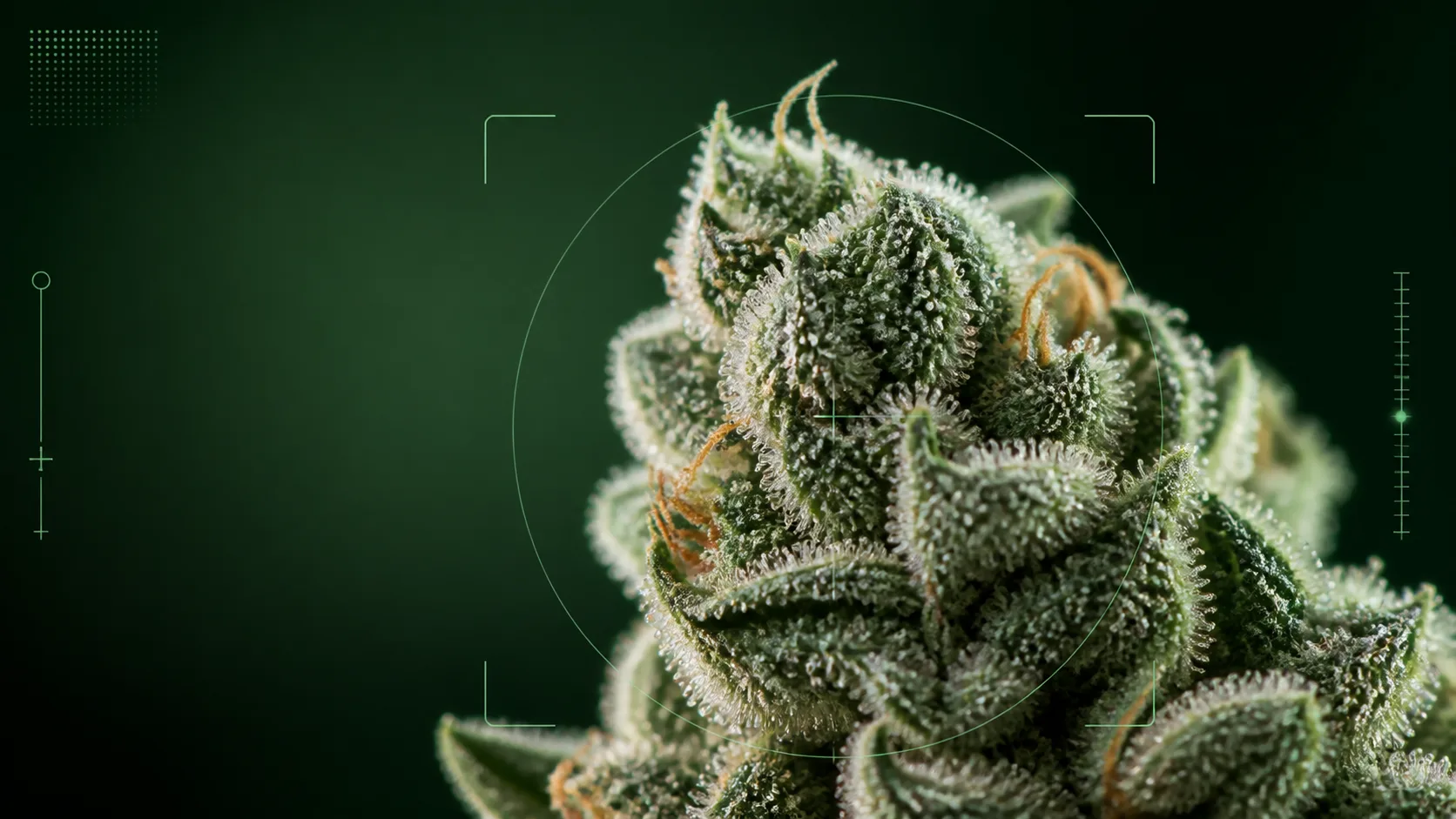
If you have ever heard someone say “look at all that frost,” they are talking about trichomes. Under bright light, healthy resin glands can make cannabis flower look dusted with sugar. Under magnification, many of the important ones look like tiny mushrooms: a stalk with a rounded head where resin accumulates.
That visible frost matters because glandular trichomes are strongly tied to the compounds people care about: cannabinoids such as THCA and CBDA, plus aromatic terpenes. But the practical lesson is more nuanced than “frostier always means stronger.” Trichomes can help you judge freshness, handling, maturity, and photo quality. They cannot replace a Certificate of Analysis, a batch label, or careful dosing decisions.
Cannabis trichomes explained in plain English
Trichomes are plant surface structures. Cannabis has several types, but the most famous are glandular trichomes because they produce and store resin. Scientific reviews describe stalked glandular trichomes on female flowers as major sites where cannabinoids and terpenes are made and stored.
For consumers, the easy version is this: trichomes are a visible sign that the flower has resin. Resin is where many important cannabis compounds concentrate. That is why dry flower with intact, sparkling trichomes often looks more appealing than flower that is dusty, flattened, brown, or rubbed smooth.
Still, trichomes are only one part of the story. A beautiful-looking bud can be mislabeled. A frosty sample can be old, contaminated, or poorly tested. A less photogenic batch may still have a valid lab report and a terpene profile someone prefers. Use trichomes as evidence, not proof.
What trichomes can tell you from a flower photo
A clear cannabis photo can reveal several useful trichome-related clues:
- Visible resin coverage: whether the surface looks sparkling, patchy, rubbed off, or dull.
- Handling quality: heavy compression, rough trimming, or excessive shake can break resin heads and reduce visible detail.
- Freshness clues: flower that looks brittle, brown, dusty, or overly dry may have lost some visual and aromatic quality.
- Bud structure context: dense buds, airy buds, sugar leaves, and foxtailed tips can all show trichomes differently.
- Photo usefulness: if the trichomes blur into a shiny smear, the image is probably not good enough for serious visual comparison.
These clues are exactly why trichomes matter for strain-identification photos. They give both humans and image tools more texture to compare. For better scan inputs, pair this guide with our checklist on how to take better weed photos.
What trichomes cannot prove
The most common mistake is treating frost like a lab number. It is tempting: more sparkle looks like more potency. But a camera cannot measure total THC, THCA, CBD, CBG, terpene percentages, pesticide screening, microbial testing, heavy metals, or residual solvents.
Trichome appearance also cannot prove the exact strain name. Different growers can sell different phenotypes under the same name, and post-harvest handling can make two related samples look very different. If you want batch-level certainty, the important documents are the product label and COA, not just a pretty macro shot.
The National Center for Complementary and Integrative Health notes that the cannabis plant contains hundreds of chemical substances, with more than 100 cannabinoids identified. That chemical complexity is one reason visual inspection has limits. The FDA has also warned about quality, labeling, contamination, and unproven-claim concerns around cannabis-derived products. Those are not problems a photo can solve.
Clear, cloudy, amber: what trichome color means
Growers often talk about trichome color because gland heads can appear clear, cloudy, or amber as flower develops and ages. In cultivation conversations, clear trichomes are usually associated with earlier development, cloudy or milky heads with mature resin, and amber tones with later oxidation or degradation. That framework can be useful, but it is easy to overstate.
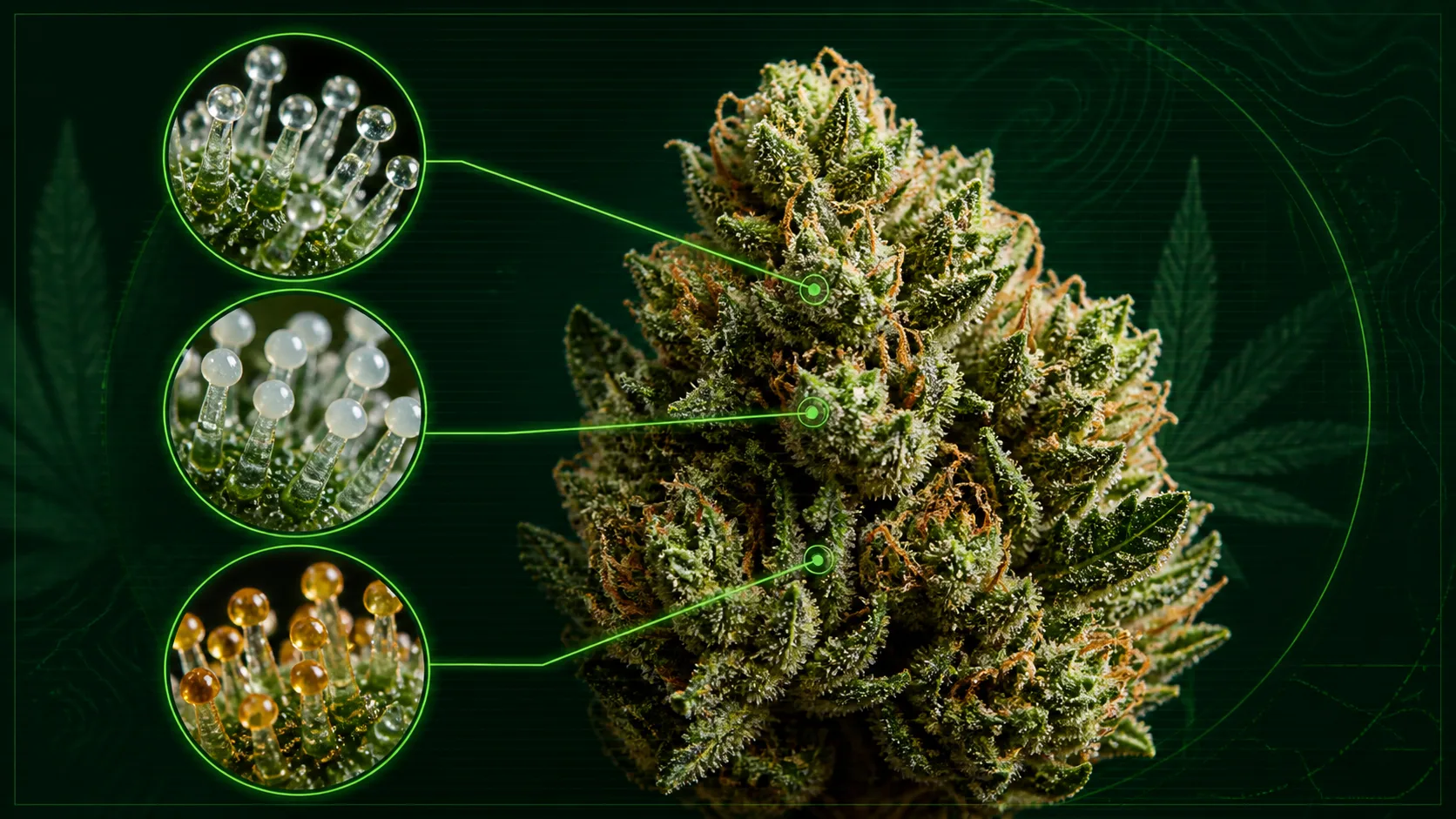
Most consumer photos are not controlled microscope images. Lighting, white balance, compression, flash glare, and camera focus can make trichomes look clearer, cloudier, or more amber than they are. Once flower is dried, packaged, shipped, and stored, color clues can also reflect handling and age rather than a clean harvest-timing story.
So use trichome color as a clue, not a verdict. If a product claims a specific potency or terpene profile, look for the lab result. If a scanner suggests a likely strain family, compare the visible flower traits with the label and batch information before trusting the match.
Why frosty weed is not always better weed
Frost is attractive because resin is important. But “best” depends on more than visible trichomes. A balanced flower-quality check also considers aroma, moisture, cure, trim, age, packaging, source reputation, and testing. Our guide to bud structure and cannabis quality goes deeper on shape, density, pistils, leafiness, and freshness.
There are also style differences. Some strains and phenotypes show heavy surface resin. Others may express aroma, structure, or color differently. Some buds photograph beautifully because the outer surface is coated, while interior quality, cure, and storage are less obvious. And some products are coated, infused, rolled in concentrate, or otherwise processed in ways that make visual frost less meaningful.
In other words: trichomes are valuable, but they do not make every other quality signal disappear.
How trichomes connect to cannabinoids and terpenes
Research on cannabis glandular trichomes describes them as cellular factories for plant metabolites. The resin in these structures is associated with acidic cannabinoids like THCA and CBDA, which can convert into THC and CBD forms through heat, time, and processing. If you want the chemistry basics, start with THCA vs THC explained.
Trichomes are also connected to aroma. Terpenes are volatile compounds that contribute to cannabis smell and flavor, and scientific reviews describe terpene production alongside cannabinoid metabolism in cannabis resin. That does not mean smelling or photographing a bud lets you calculate a terpene report. It means the sticky, aromatic surface of the flower deserves attention. For more context, read our guide to terpenes in weed.
How to photograph trichomes for better identification
You do not need a lab microscope to take a more useful flower photo. Try this practical setup:
- Use bright indirect light. Window light or a soft desk lamp is better than harsh flash or colored LEDs.
- Focus on one dry bud. Mixed piles, jars, bags, grinders, and fingers confuse the image.
- Avoid over-macro shots. Extreme close-ups can show resin but hide the overall bud shape a strain identifier needs.
- Keep color honest. Filters and boosted saturation make green, purple, orange, and amber cues less trustworthy.
- Choose the best single frame. If you take several photos for yourself, use the one that shows whole-bud structure and visible resin detail most clearly.
That workflow pairs well with a visual tool. A weed scanner app can compare visible flower features from a clean single-photo scan, while the label and COA handle batch identity and lab-measured chemistry.
Scan flower photos with realistic expectations
KushScan can help analyze dry cannabis flower photos for visual strain-style clues, likely matches, sativa/indica context, and estimated THC context. Treat the scan as a visual assistant — then verify important claims with labels, COAs, and trusted sources.
Download KushScanThe takeaway
Cannabis trichomes are one of the most important visual features on dry flower. They can show resin coverage, handling, freshness clues, and useful scan detail. They cannot certify exact strain identity, potency, terpene profile, contaminants, legality, or personal effects. Frost is a clue. Lab testing is evidence. Smart consumers use both in the right lane.
Sources
- Cannabis Glandular Trichomes: A Cellular Metabolite Factory, peer-reviewed review on cannabis trichomes, cannabinoids, terpenes, and resin storage.
- Frontiers in Plant Science: Cannabis Glandular Trichomes, review describing stalked glandular trichomes and metabolite production.
- NCCIH: Cannabis, Marijuana, and Cannabinoids — What You Need To Know, NIH overview of cannabis chemistry and cannabinoids.
- FDA: Cannabis and Cannabis-Derived Products, Including CBD, safety, labeling, quality, and unproven-claim context.
- NIST: Tools for Cannabis Laboratory Quality Assurance, context on accurate cannabis testing and measurement.